Navigating the Confusion of Health Trends

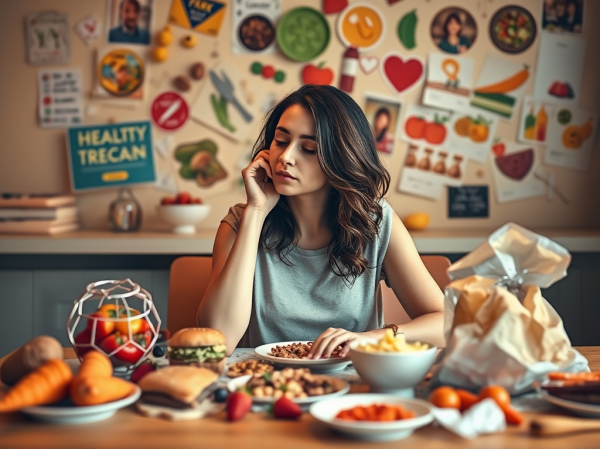
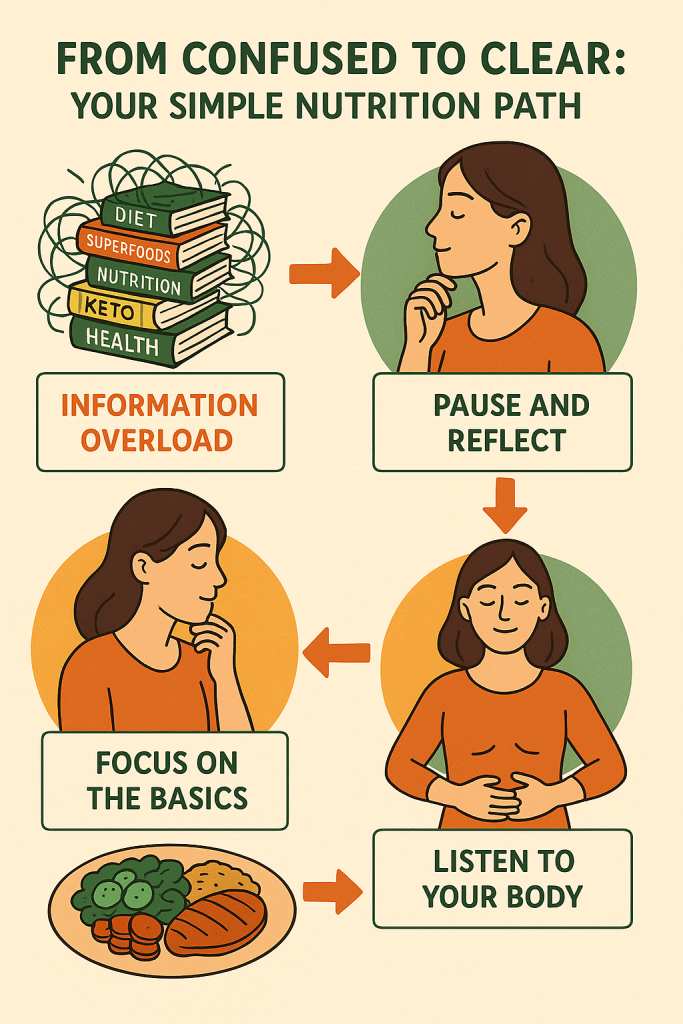
I don’t know about you, but I’ve often felt completely lost in today’s sea of health advi

One day we’re told to go low-carb, the next day it’s “carbs are your best friend.” Then suddenly everyone’s drinking celery juice, and I wonder—is it me or has health become more confusing than helpful?

1. I Was Drowning in “Healthy Tips”

Every time I opened Instagram or YouTube, I was flooded with new suggestions:

  • Eat only before sunset.
  • Don’t eat fruits after meals.
  • Skip rice.
  • Rice is okay if it’s brown.
  • No, even brown rice has sugar!

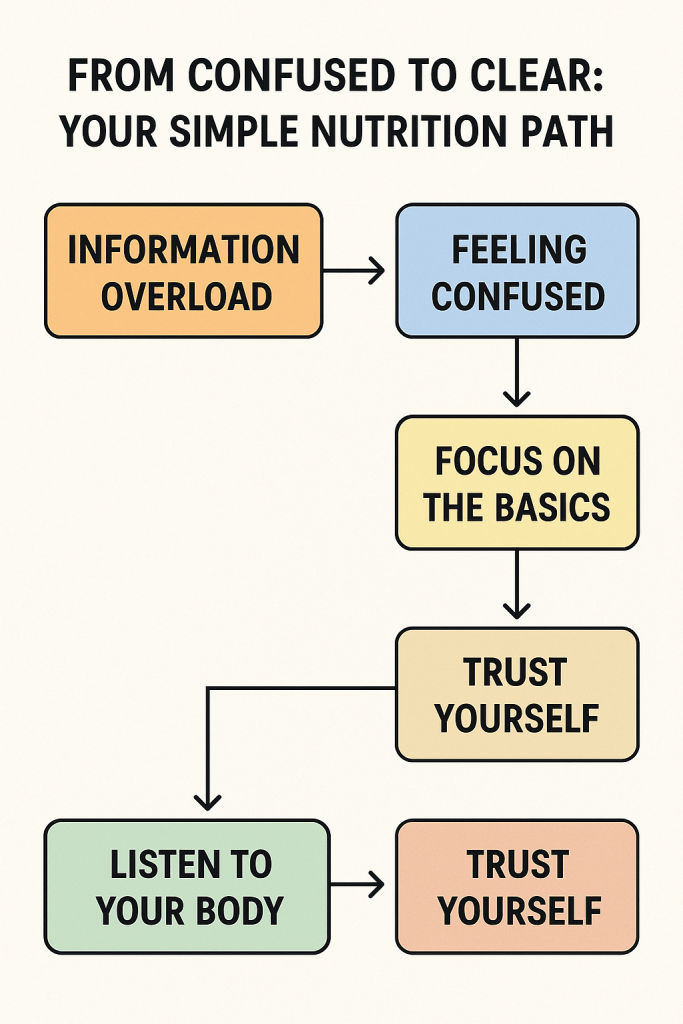
I was tired. Not physically, but mentally. I started second-guessing everything I ate, even home-cooked food. And that’s when I realized—too much health advice was slowly taking away my peace.

2. Not Every Trend Is for Everyone

At one point, I tried following everything I read or watched. Result? I was skipping real meals, overloading on so-called “superfoods,” and feeling guilty all the time.

But my body wasn’t happy. Neither was my mind.

Then I remembered something I used to say often when I was part of the health network industry:

“No diet works unless it suits your lifestyle and your body.”

It was time to listen to that again.

3. What Actually Works (And It’s Not Complicated)

After many trials (and errors), I came back to the basics:

  • Eat fresh and homemade as much as possible.
  • Follow a routine that suits you—not the influencer with 6-pack abs.
  • Drink enough water.
  • Walk. Breathe. Sleep well.

Nothing fancy. But guess what? It works. I started feeling better—lighter, calmer, and most importantly, free from the pressure of doing everything “perfectly.”

4. A Gentle Reminder—You Know More Than You Think

Sometimes, we know what’s best for us—we’ve just stopped trusting ourselves.

So next time you see a shiny new health trend, pause and ask:

“Is this for me? Or am I just being pulled into the noise again?”

I’m not a doctor. I’m just a woman who has made her share of health mistakes—and learnt from them. If you’ve ever felt confused or overwhelmed, you’re not alone. Share your thoughts in the comments—I’d love to hear how you deal with the “nutrition noise” around you.

Let’s support each other in making health simple again.

“What Helped Me, My Personal Finds”. It might help you also:

When I followed a high-protein diet, I struggled with digestion — until I found this digestive enzyme that really helped.

To understand which foods suit me best, I started writing things down in a wellness journal. Here’s the one I use. It really helped me listen to my body better.

I once avoided fats completely, but adding healthy oils like this cold-pressed olive oil made my meals tastier and my energy more stable.

Note for transparency:

This post contains affiliate links. If you buy through them, I may earn a small commission — at no extra cost to you. Thank you for supporting Healthy Living Hub!

Hi, I’m Sonita — the voice behind Healthy Living Hub. I share simple, science-backed tips to live a healthier, more balanced life — one mindful choice at a time. 
“I believe real health comes from small, consistent habits — not perfection.”

Why One Diet Doesn’t Fit All: Trust Your Body

Why One Diet Doesn’t Fit All: Trust Your Body

Introduction

We live in a world full of diet charts, food rules, and endless advice. Keto, vegan, low-carb, high-protein — the list never ends. For a while, it feels exciting to try something new. But then reality sets in: the same diet that made your friend glow might leave you feeling tired, moody, or even unwell.

Here’s the truth: what works for one person may not work for another. That’s because our bodies are unique — with different genetics, lifestyles, stress levels, and even emotions. The secret is not to copy every new diet trend, but to pause, listen, and trust your body’s signals.

Our Body Speaks in Small Whispers

Your body already tells you what it needs. That afternoon headache may not require another cup of coffee, but simply a glass of water. Constant yawning may not mean you’re lazy, but that your body is asking for rest.

When we ignore these signals and try to “force” ourselves into a diet plan that doesn’t suit us, we end up feeling worse. But when we respect these small whispers, we discover that our body is the best nutritionist we’ll ever have.

Eating with Awareness

Most diet plans tell us what and when to eat, often ignoring how we feel. But food is deeply personal. For some, rice gives comfort and energy. For others, it feels heavy. One person may thrive on dairy, while another feels bloated.

I’ve started pausing before meals and asking myself: Am I truly hungry, or just bored or stressed? That one question has changed my choices. Eating with awareness helps us find the foods that energize us instead of blindly following a chart.

Movement, Not Punishment

Diet and exercise often come as a package deal — “burn calories, earn your food.” But movement should never be punishment. Just like diet, the right exercise looks different for each of us.

For some, it’s lifting weights. For others, it’s walking in the park, dancing in the living room, or stretching on the floor. The important thing is not what others are doing, but what feels good and sustainable to you.

Rest is Productive Too

Here’s something most diet books don’t tell you: no diet will work if you’re sleep-deprived and exhausted. Your metabolism, hormones, and even cravings are deeply connected to rest.

When your body says, “Stop. Breathe. Sleep.” — that’s not laziness. That’s healing. Rest is not a break from progress; it’s a part of it.

A Small Daily Check-In

To stay tuned into your body, I use three simple questions at the end of each day:

  1. Did I eat in a way that gave me energy?
  2. Did I move in a way that felt good?
  3. Did I allow myself enough rest?

Most days, I don’t get all three perfect. But the act of checking in keeps me honest, and slowly, my body and mind feel more balanced.

Conclusion

The next time you’re tempted to follow the latest diet trend, pause and ask yourself: “But what does my body say?”

Because one diet can’t fit all — and your body already has the wisdom you need. Trust it. Nourish it. And let it guide you to health, your way. 💙

Found this helpful?

You can read this post in your own language — just tap the three dots in your browser and choose Translate, or open the post in Google Translate.

Want more real, practical health tips like this?

Subscribe to Healthy Living Hub — because your health journey should feel personal, not confusing.

Hi, I’m Sonita — the voice behind Healthy Living Hub. I share simple, science-backed tips to live a healthier, more balanced life — one mindful choice at a time. 
“I believe real health comes from small, consistent habits — not perfection.”
Healthy Eating Across Ages: Simple Strategies

Read this in your own language:

To read this post in your language, tap the three dots in your browser (on mobile) or right-click on the page (on a computer), and select “Translate”.

Or, copy the post link and open it in Google Translate.

If you enjoyed this post, don’t forget to Subscribe to Healthy Living Hub for more easy, practical health tips delivered to you!

Stay connected, stay healthy!

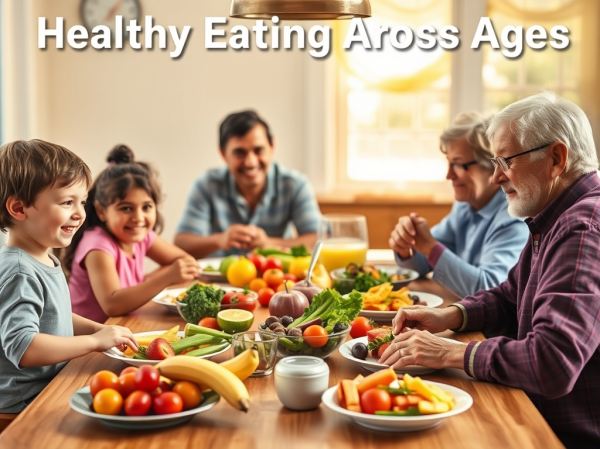
As a mother, daughter, and health enthusiast, I’ve realized one simple truth—our food needs change with age, but we often feed everyone in the family the same way. That’s why I’m sharing a simple, age-wise food guide that I’ve personally tried and seen results from.

Why This Matters

  • Kids are getting obese too early.
  • Teens are skipping meals.
  • Adults are eating stress, not food.
  • Seniors are losing strength silently.

Let’s change that—starting today.

Age-Wise Food Guide

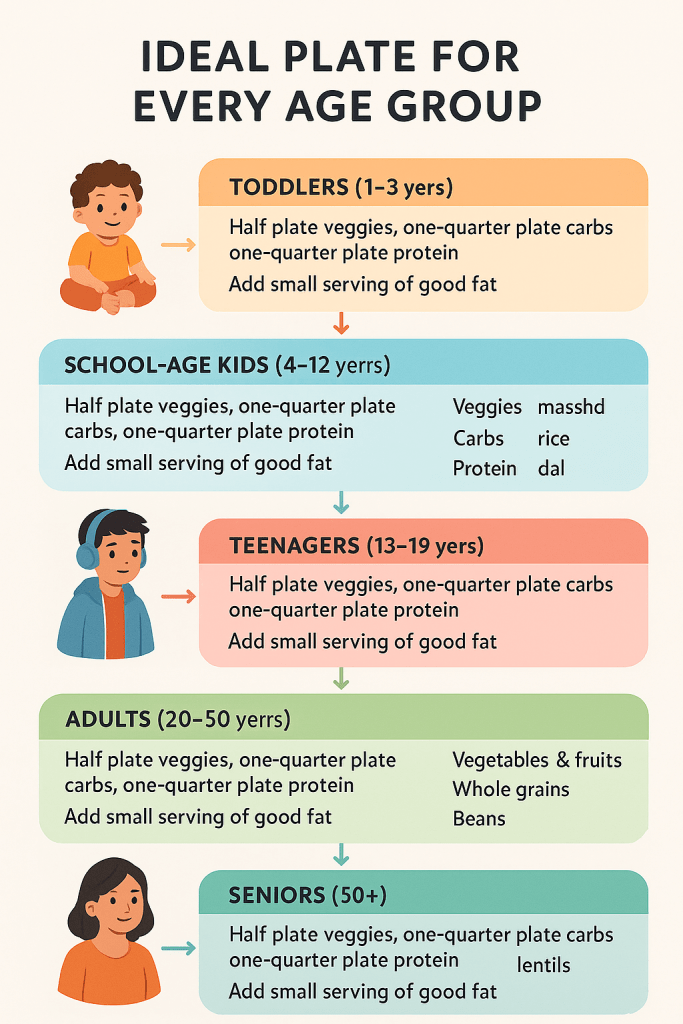
1. Toddlers (1–3 years): Building Blocks

  • Small stomachs, big needs!
  • Focus on: Full-fat milk, mashed vegetables, soft fruits, rice, dal.
  • Avoid: Excess sugar or salt.

My tip: Mix vegetables into khichdi or soups—they’ll never notice!

2. School-Age Kids (4–12 years): Fuel for Growth

  • Growing fast and always active.
  • Focus on: Protein (eggs, lentils), calcium (milk, paneer), colorful veggies, whole grains.
  • Avoid: Packaged snacks, sugary drinks.

What to do: Replace Chips with roasted Makhana or Fruit sticks

3. Teenagers (13–19 years): Hormones & Hunger

  • Emotional, physical rollercoaster!
  • Focus on: Iron (green leafy veggies, dates), Protein (nuts, fish), Omega-3s.
  • Avoid: Skipping meals or surviving on instant noodles.

Your Children will love smoothies if you mix Cocoa Powder and call it Choco-Power -Drink

4. Adults (20–50 years): Balance & Stress Buster

  • Working long hours, sedentary lifestyle.
  • Focus on: Fiber (vegetables, fruits), Lean proteins, Healthy fats (nuts, seeds).
  • Avoid: Overeating at night, mindless snacking.

Working people prep meals in advance on Sundays – saves time and helps you stay on track.

5. Seniors (50+): Strength & Digestion Support

  • Nutrient absorption slows down.
  • Focus on: Calcium, Vitamin D, Easily digestible proteins, Hydration.
  • Avoid: Hard-to-digest fried food.

For Senior people like our parents make soft vegetable upma and warm haldi milk daily.

Simple Reminder for All Ages

Hi, I’m Sonita — the voice behind Healthy Living Hub. I share simple, science-backed tips to live a healthier, more balanced life — one mindful choice at a time. 
“I believe real health comes from small, consistent habits — not perfection.”
Understanding Fats: The Good, The Bad, and The Healthy

Fats – Friend or Foe? Understanding the Good and the Bad

When we hear the word fat, most of us think of weight gain, heart disease, or unhealthy eating. But the truth is — fats are essential for our body’s well-being. Let’s break it down simply.

Why Do We Need Fat?

Energy-dense: Fat provides 9 calories per gram, more than carbs or protein.

Vitamin Absorption: Helps absorb vitamins A, D, E, and K.

Hormone Health: Supports production of hormones like estrogen and testosterone.

Brain Power: Your brain is nearly 60% fat — it needs good fat to function.

Cell Structure & Skin: Fat is crucial for cell membranes and healthy skin.

Types of Fat – Know the Difference

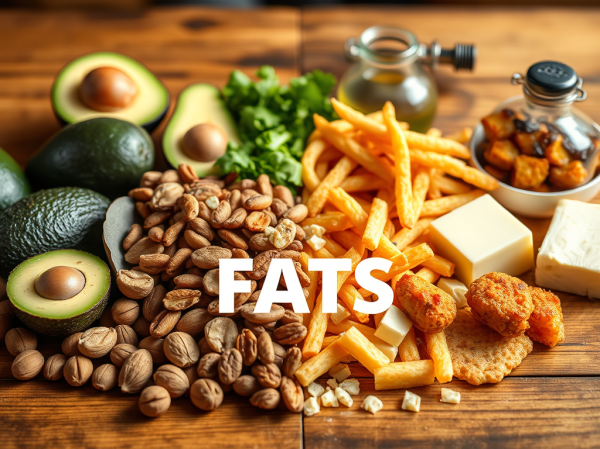
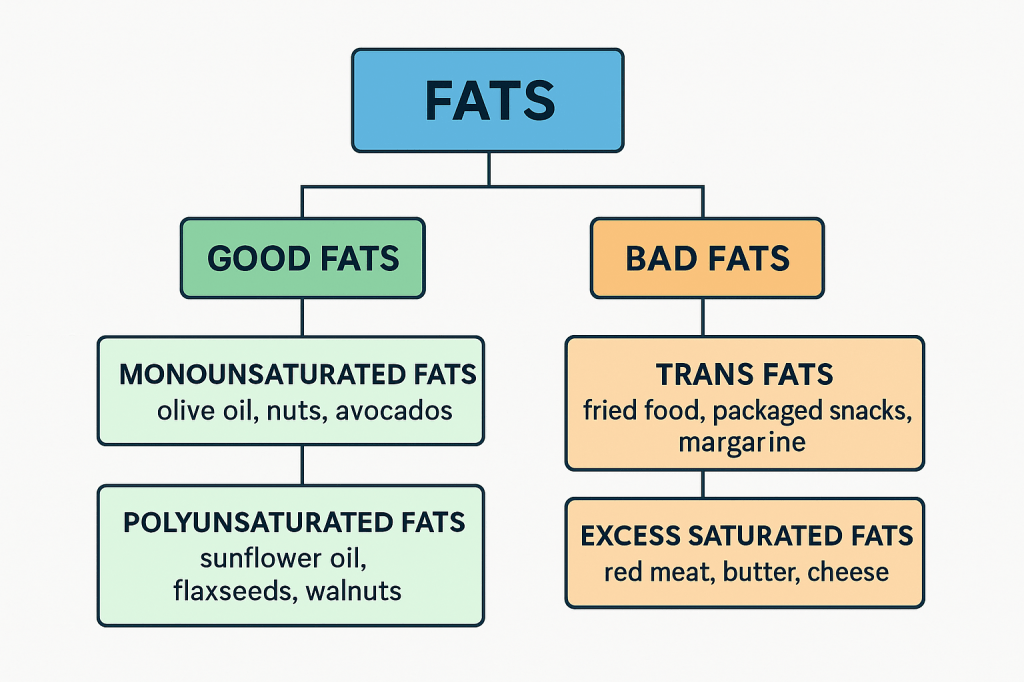
1. Good Fats (Healthy Fats)

These fats support heart and brain health and should be included in your diet:

Monounsaturated fats: olive oil, almonds, peanuts, avocados

Polyunsaturated fats:

Omega-3: fatty fish (salmon, mackerel), flaxseeds, walnuts

Omega-6: sunflower oil, soybean oil, tofu (but balance is key)

2. Bad Fats (Unhealthy Fats)

These increase your risk of heart disease and should be minimized:

Trans fats: found in fried foods, packaged snacks, baked goods

Excess saturated fats: from fatty meat, butter, cheese — small amounts are okay, but don’t overdo it

How Much Fat Do You Need?

According to Harvard Health and WHO guidelines:

20–35% of your daily calories should come from fat

• Prioritize unsaturated fats (plant-based oils, nuts, fish)

• Limit saturated fats to less than 10% of daily calories

Avoid trans fats completely

What Happens If You Eat Too Much or Too Little Fat?

Too Much Fat Too Little Fat

Weight gain Poor vitamin absorption

High cholesterol Hormonal imbalance

Risk of heart disease Dry skin and hair

Fatty liver Fatigue and brain fog

Latest Research Insights (2024–2025)

Not all saturated fats are equally harmful — coconut oil and dairy fat may have neutral effects.

Ultra-processed foods with added fats are more dangerous than natural fat sources.

Balanced omega-6 and omega-3 ratio is vital — modern diets often have too much omega-6.

Ketogenic diets (high-fat, low-carb) can help with weight loss and insulin resistance but must be done under supervision.

Final Takeaway – Don’t Fear Fat, Choose Wisely

Fat isn’t your enemy. It’s about quality and balance. Focus on whole food sources, cook smart, and avoid processed junk. Your heart, brain, and body will thank you.

Hi, I’m Sonita — the voice behind Healthy Living Hub. I share simple, science-backed tips to live a healthier, more balanced life — one mindful choice at a time. 
“I believe real health comes from small, consistent habits — not perfection.”

Understanding Macronutrients: A Simple Guide

MACRONUTRIENTS

Macronutrients Made Simple – What Your Body Really Needs

Are you confused about what to eat and what to avoid?

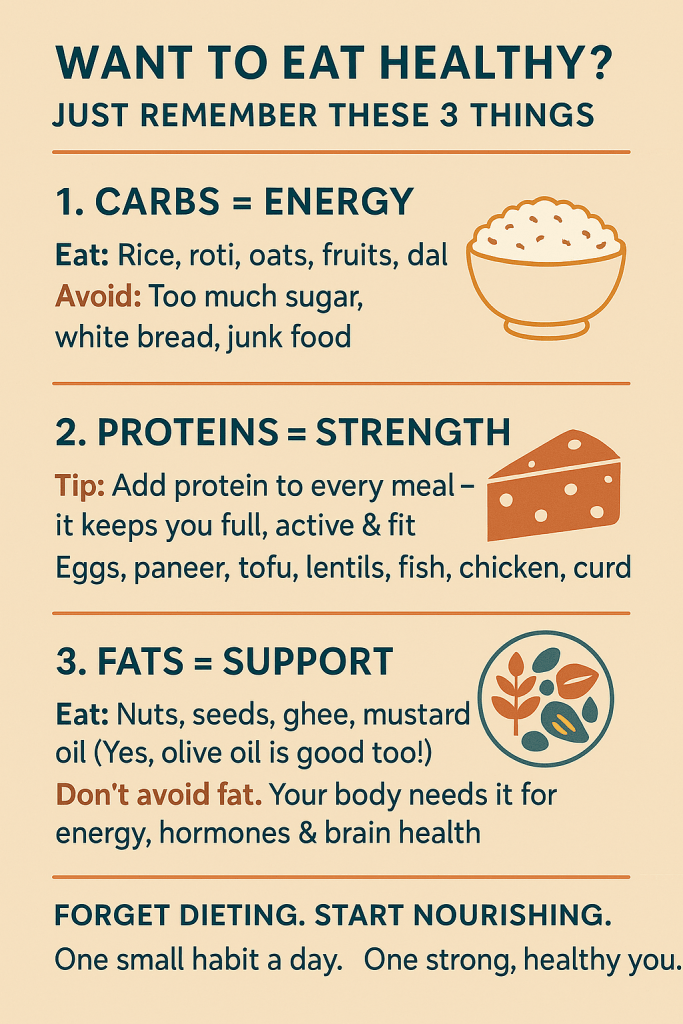
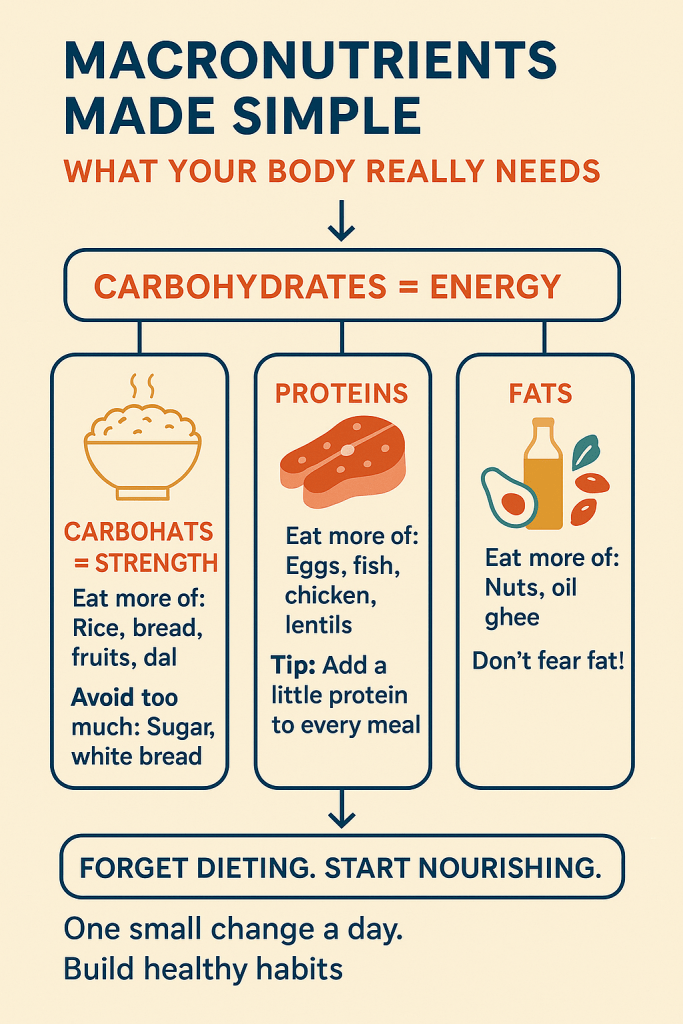
Let’s make it super simple: your body mainly needs three macronutrients — carbohydrates, proteins, and fats — to stay active, strong, and healthy.

Each one plays a unique role, and the key is balance, not elimination.

1. Carbohydrates = Energy

Carbohydrates are your body’s main fuel source.

They help you stay energetic, focused, and full of life.

Eat more of:

  • Whole grains (brown rice, oats, whole wheat roti)
  • Fruits and vegetables
  • Lentils, dal

Avoid too much:

  • Sugar, white bread, pastries, processed foods

2. Proteins = Strength

Proteins are the building blocks of your body.

They help build muscles, repair tissues, and keep you feeling full.

Eat more of:

  • Eggs, fish, chicken
  • Paneer, tofu, curd
  • Pulses, sprouts, lentils

Tip: Add a little protein to every meal — it helps avoid overeating and supports energy.

3. Fats = Support

Fats help your body absorb vitamins, protect organs, and keep your brain and hormones healthy.

Eat more of:

  • Nuts, seeds, ghee, mustard oil, olive oil
  • Avocados, coconut (in moderation)

Don’t fear fat! Your body needs good fats to function properly.

The Balanced Plate Formula (Simple to Remember)

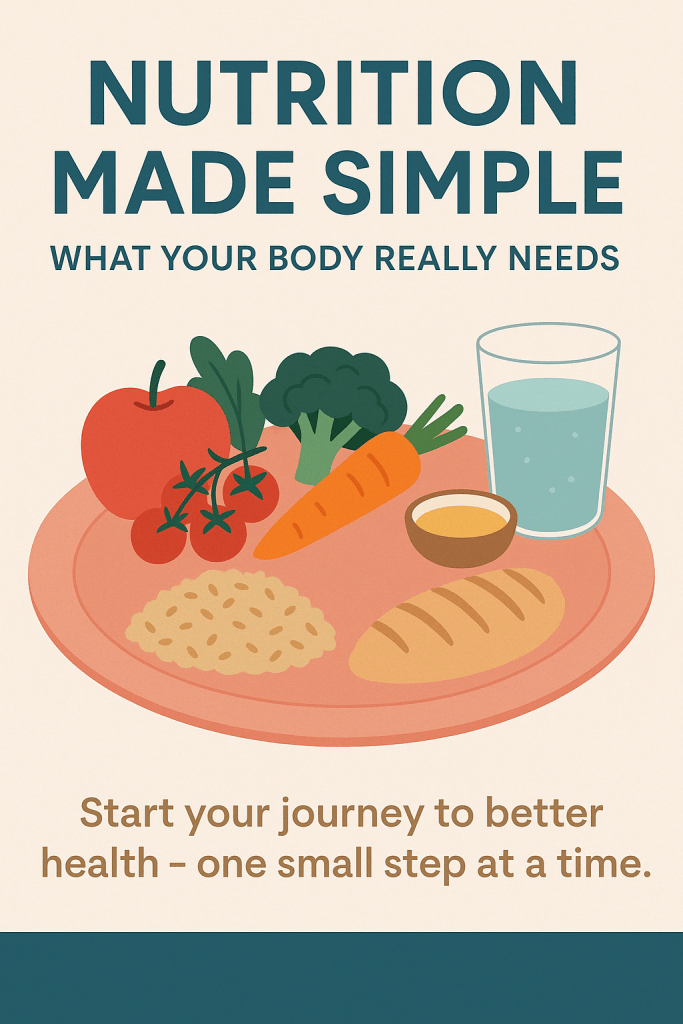
Here’s the easiest way to eat right at every meal:

  • ½ of your plate → vegetables (cooked or raw)
  • ¼ of your plate → carbohydrates (like brown rice, roti, dal)
  • ¼ of your plate → proteins (like paneer, fish, egg, lentils)

Add a spoon of healthy fat (ghee, mustard oil, or nuts) — and you’re done!

This one plate method helps you:

  • Control portion size
  • Get all nutrients
  • Feel full and energetic

Forget Dieting. Start Nourishing.

You don’t need a perfect diet — just a balanced one.

Start with one small change a day. Build healthy habits step by step.

Macronutrients are not your enemy — they are your body’s best friends.

Learn them. Respect them. Balance them!

Hi, I’m Sonita — the voice behind Healthy Living Hub. I share simple, science-backed tips to live a healthier, more balanced life — one mindful choice at a time. 
“I believe real health comes from small, consistent habits — not perfection.”
Essential Nutrition Tips for Everyone

Welcome back to Healthy Living Hub!

Most people think healthy eating is only for those who want to lose weight or are already sick. But that’s not true. Good nutrition is something everyone needs — whether you are young or old, busy or relaxed, thin or overweight.

Let’s break it down in simple steps so you understand what your body really needs every day.

1. What is Nutrition?

Nutrition means feeding your body with the right fuel. Just like your car needs petrol, your body needs energy — and that energy comes from food.

There are two types of nutrients:

Macronutrients – Carbohydrates (energy) – Proteins (muscles and repair) – Fats (energy and healthy cells)

Micronutrients – Vitamins and minerals (strong bones, immunity, etc.) Even though you need these in small amounts, they are very important!

2. Why One Diet Doesn’t Fit All

Everyone’s body is different. Your age, activity, health condition, and even stress levels affect what kind of food you need.

But don’t worry — a few simple rules work for all. Let’s look at those now.

3. A Simple Daily Eating Formula

Here’s an easy way to eat right:

Make your plate colorful — like a rainbow!

Half plate: fruits and vegetables One-quarter: whole grains (rice, oats, roti) One-quarter: protein (dal, paneer, fish, egg) Add some good fat: like nuts or a spoon of ghee Drink 6–8 glasses of water daily

4. Busting Common Food Myths

Let’s clear up some common food confusions:

Carbs are bad” — No, healthy carbs like fruits and grains are good. “Fat makes you fat” — Only bad fats do. Good fats are important. “Skipping meals helps weight loss” — No! It slows down your metabolism.

5. Take Your First Step Today

You don’t have to change everything overnight.

Just choose one habit and stick to it:

Add a fruit to your breakfast Replace fried snacks with roasted ones Cook one healthy meal a day Drink more water

Small steps = big changes.

P.S. If you found this post helpful, share it with a friend who’s also trying to eat better. Let’s spread simple, smart nutrition — one small step at a time!

Hi, I’m Sonita — the voice behind Healthy Living Hub. I share simple, science-backed tips to live a healthier, more balanced life — one mindful choice at a time. 
“I believe real health comes from small, consistent habits — not perfection.”
Transform Your Health: The Power of Prevention

You might be wondering why I chose to start writing about health and lifestyle. The reason is very personal.

My husband is diabetic. My mother struggled with Arthritis and had knee replacement I was also obese at one point in my life and suffered from Thyroid,Cholesterol and high Blood Pressure, though not anymore. Many of my close friends suffer from arthritis, high cholesterol, and other lifestyle-related problems. I used to work as a networker in the health industry, so I’ve seen these issues up close—both professionally and personally.

The sad part is, many people still don’t realize that prevention is always better than cure. Fast food has become a part of daily life. Restaurant outings, oily food at home, and unhealthy snacking are common in almost every household. Even children are becoming obese. And heart attacks? They’re no longer something that happens only to the elderly.

Stress levels are rising everywhere. From young students to working adults and homemakers—no one is untouched. And stress silently contributes to many health issues without us realizing it.

That’s why I felt the urge to do something.
Even if one person becomes more aware and takes one healthy step after reading this blog, it’s worth it.

This space is for you, me, and everyone who wants to live better—not with fear, but with simple, doable changes.

Coming up next:
In my next post, I’ll share tiny healthy habits that you can start right now—even with a busy schedule.

Note: This blog is written in simple English and can be easily translated into local languages using the translation tool on your browser. I want it to reach everyone.

Hi, I’m Sonita — the voice behind Healthy Living Hub. I share simple, science-backed tips to live a healthier, more balanced life — one mindful choice at a time. 
“I believe real health comes from small, consistent habits — not perfection.”
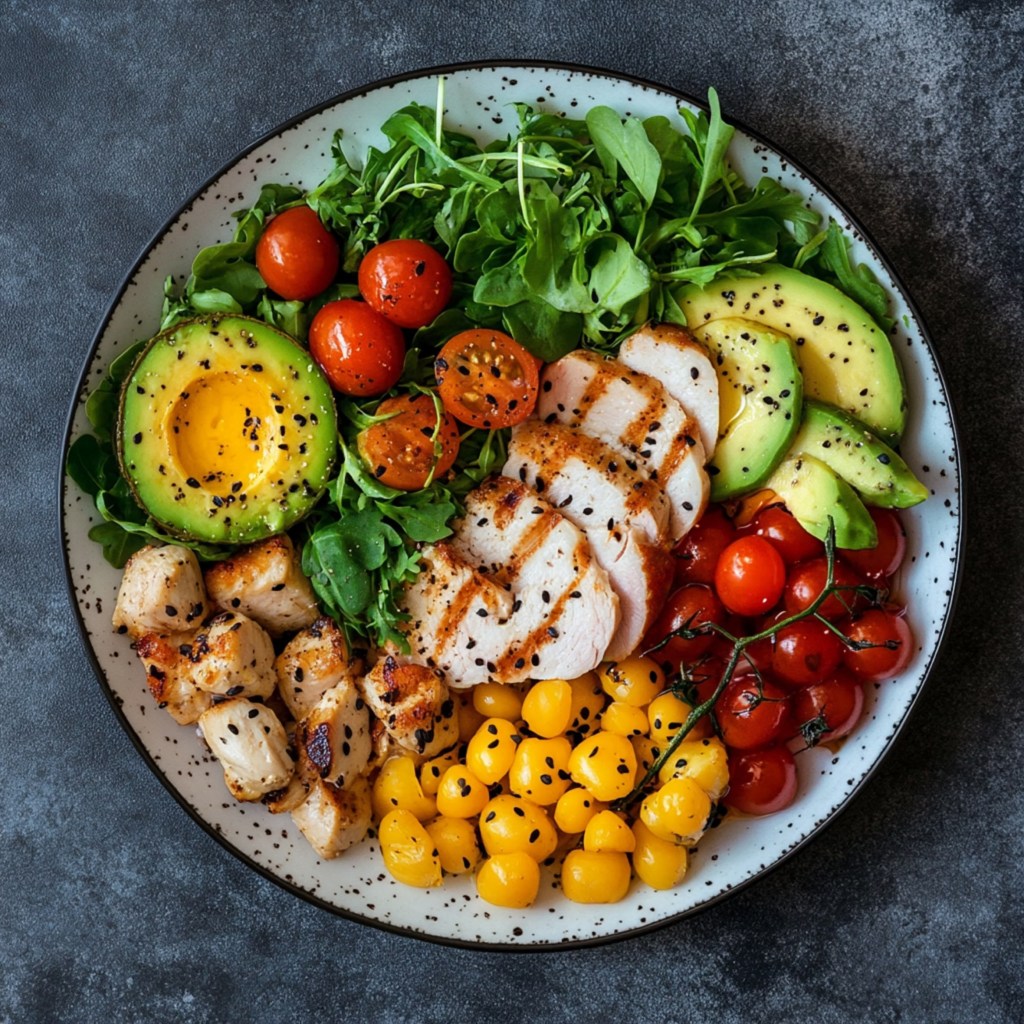
Overcoming Lifestyle Diseases Easily

Welcome to Healthy Living Hub

We are living in a fast-paced world where health often takes a back seat. As a result, many people are silently suffering from lifestyle diseases like obesity, diabetes, high blood pressure, and stress.

Healthy Living Hub is here to help. This blog is your friendly space to learn simple, practical, and useful tips for a healthy life. No big words. No confusing advice. Just easy, clear, and interesting information that you can follow every day.

Let’s take small steps together toward a better and healthier life.

Stay tuned—your health journey begins here!

Hi, I’m Sonita — the voice behind Healthy Living Hub. I share simple, science-backed tips to live a healthier, more balanced life — one mindful choice at a time. 
“I believe real health comes from small, consistent habits — not perfection.”
Blog at WordPress.com.

Up ↑