
Is Your Morning Tea Making You Tired? Try This Instead

Tea contains caffeine and tannins — compounds that can affect your energy in ways you might not expect:

✅ Blocks iron absorption

Iron helps your body carry oxygen. When iron absorption is reduced, you may feel tired or fatigued.

✅ Raises stress hormone levels

Tea can increase cortisol — especially when consumed on an empty stomach. This can lead to energy crashes later in the day.

✅ Triggers energy dips

The quick spike in alertness from caffeine can be followed by a noticeable drop in energy a few hours later.

So even though tea feels like it wakes you up, it might actually be contributing to sluggishness by midday.

🍋 

Better Alternative: A Natural Energy Drink You Can Make at Home

Instead of reaching for your regular tea every morning, try this super simple energy-boosting drink:

🌿 Ingredients:

  • Warm water
  • 1 slice of lemon
  • A pinch of salt
  • 1 teaspoon of soaked chia seeds

🌞 Why This Works:

✔ Rehydrates your body first thing in the morning

✔ Lemon supports digestion and vitamin C absorption

✔ Chia provides slow-burn energy thanks to fiber and healthy fats

✔ No caffeine crash later

This drink gives you steady, natural energy without the mid-day slump.

🗓 Try This For 7 Days

Swap your morning tea for this lemon–chia drink for one week and observe how your energy changes. Many people find themselves:

🌟 Less tired

🌟 More alert

🌟 More productive throughout the day

It’s a small change, but it can have a big impact on how you feel.

📌 Final Thoughts

Morning rituals shape how our whole day goes. Sometimes, what feels comforting (like a cup of tea) might not be the best fuel for your body. By choosing nourishing alternatives, you can support steady energy, better digestion, and improved overall well-being.

If you found this helpful, don’t forget to watch the video and follow Healthy Living Hub by Sonita for more practical tips that you can easily add to your daily life.

👉 Watch here: https://youtube.com/shorts/9LfQrGMSKXQ?si=rQ2mT1tJ4H_syP7n
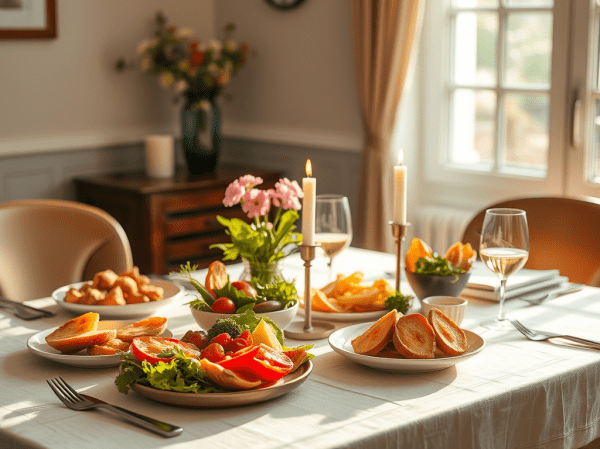
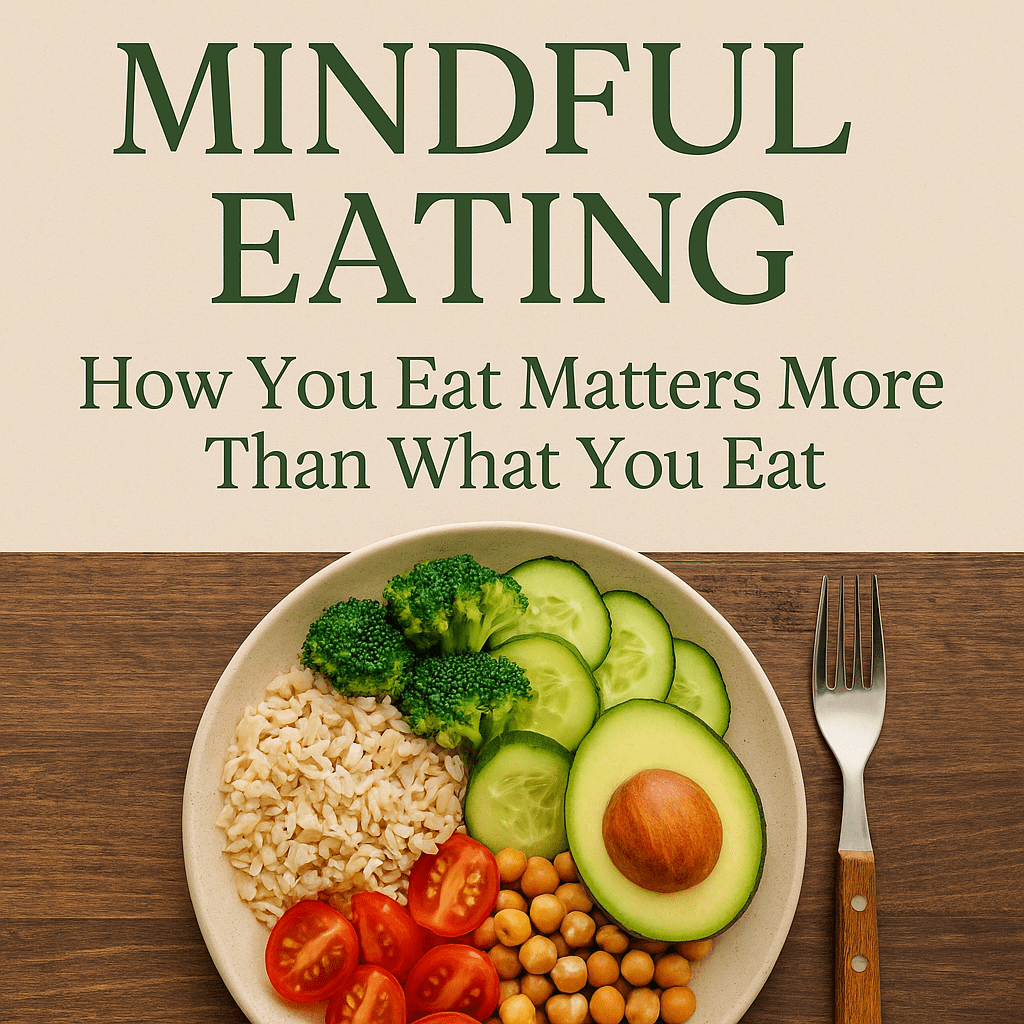
Transform Your Meals with Mindful Eating

by Sonita | Healthy Living Hub

Have you ever finished a meal and realised…

you don’t even remember how it tasted?

Maybe you were scrolling through your phone, replying to messages, or watching TV.

Before you knew it, your plate was empty — but your mind was still hungry.

I used to eat like that almost every day.

Lunch with emails waiting. Dinner with the television playing in the background.

I thought I was saving time, but what I was really doing was losing something precious —

my connection with food, and with myself. 🌸

💧 The Moment of Realisation

One day, I noticed something odd.

My stomach was full, but I still felt tired… uneasy… unsatisfied.

It wasn’t the food — it was how I was eating.

That simple awareness became the start of a quiet transformation.

I discovered mindful eating — and it changed how I looked at every meal.

🌿 What Is Mindful Eating?

Mindful eating isn’t a diet.

It has nothing to do with calorie counts or restrictions.

It’s about being present — using all your senses to truly experience your food.

It means slowing down enough to notice:

  • the colors and textures on your plate,
  • the aroma that greets you,
  • the taste that changes with every bite,
  • and the gentle signals your body sends when it’s satisfied.

When we eat mindfully, something beautiful happens —

our body begins to listen again.

☀️ The Science Behind It

Our brain and gut are constantly communicating, through a network of nerves and hormones.

When we eat in a hurry or while stressed, digestion slows down.

Our body produces fewer enzymes, which can lead to bloating, tiredness, or even cravings right after a meal.

But when we eat slowly and calmly,

our nervous system shifts into a relaxed state —

our gut digests better, and our mind feels clearer. 🌿

Science and mindfulness say the same thing:

Your body understands food best when you eat with awareness.

🌸 How I Started

I began small.

I started by keeping my phone away during meals.

No screens. No notifications. Just quiet time with my food.

At first, it felt strange — almost too quiet.

But soon, I began to enjoy that silence.

I could taste my food again.

I knew when I was full.

And for the first time in a long while, eating felt peaceful.

Gradually, eating became less of a routine and more of a moment of gratitude.

💫 5 Simple Habits for Mindful Eating

🌿 1. Sit while eating.

It tells your body it’s time to rest and receive.

🌿 2. Take smaller bites and chew slowly.

Your brain needs time to register satisfaction.

🌿 3. Put down your spoon or fork between bites.

It helps you slow your rhythm naturally.

🌿 4. Avoid screens and distractions.

Let your meal have your full attention — even for just ten quiet minutes.

🌿 5. Begin with gratitude.

Thank your food, the hands that prepared it, and your body that receives it.

🌿 Why It Matters

Mindful eating is not about perfection — it’s about presence.

Even one mindful meal a day can reset how your body digests,

how your mind feels, and how your day flows.

Eating isn’t just about filling hunger.

It’s about connection — with your food, your emotions, and your inner calm.

So next time you sit down to eat…

pause for a moment.

Take a breath.

Taste your food.

Because every mindful bite is a step toward better health — and a calmer you. 🌸

💧 Read, Watch, and Practice

You can also watch my YouTube video on this topic:

🎥 Mindful Eating – How You Eat Matters More Than What You Eat

👉 Healthy Living Hub by Sonita on YouTube

For more such mindful health stories, visit my blog homepage:

🌿 https://healthylivinghub923.blog

Stay mindful. Stay nourished. 💕

— Sonita, Healthy Living Hub

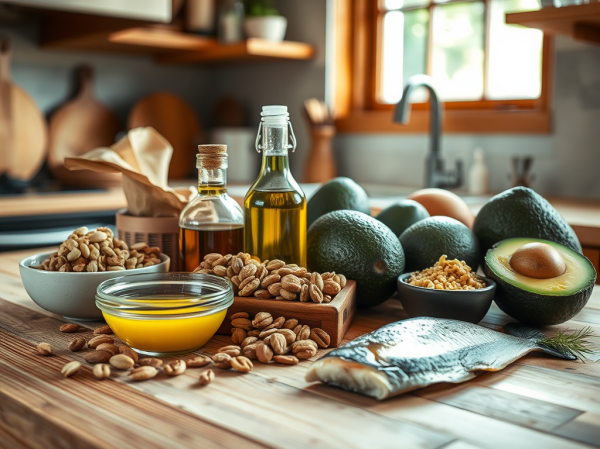
Smart Fat Choices for a Balanced Diet

How Much Fat Do We Really Need? Busting Myths, Oil-Free Diets & Smart Fat Choices

After writing about fats on my blog earlier, many of you asked:

“But how much fat is enough?”

“Is oil-free cooking better?”

“How can I eat good fat without overdoing it?”

Trust me — I’ve had the same questions. For years, I thought using less oil meant I was doing something good for my body. But over time, I realized: it’s not that simple.

So in this post, I’m sharing what I’ve learned — from nutrition research, conversations with doctors, and most importantly, from my own experience.

🧠 How Much Fat Do We Actually Need?

We all need fat. Yes, need — not just want!

According to experts, 20–35% of our daily calories should come from fat. For someone eating 2,000 calories a day, that’s roughly 45–75 grams of fat.

Here’s what that looks like in real life:

  • 1 tbsp of oil/ghee → 13–15g fat
  • A handful of almonds or peanuts → 14g fat
  • 2 tbsp peanut butter → 16g fat
  • 1 egg → 5g fat
  • 1 tbsp ground flaxseeds → 4g fat

So if your meals include a bit of oil or ghee, a few nuts, a boiled egg, or even some fish — you’re already covering your needs without even trying.

❌ The Truth About Oil-Free Diets

I’ve seen a lot of buzz around “oil-free cooking” — and I’ve even tried it myself. While it might help some people cut down on calories or manage cholesterol, completely eliminating oil is not necessary for everyone — and in many cases, not even ideal.

When we remove all fat from our food, here’s what can happen:

  • Dry, dull skin
  • Constant tiredness or “brain fog”
  • Mood swings
  • Poor absorption of vitamins like A, D, E & K
  • Irregular periods or hormonal issues

Instead of going oil-free, I now cook with measured, good-quality fats — and I’ve noticed better energy, glowing skin, and a fuller tummy after meals. No guilt!

✅ My Simple Ways to Add Healthy Fat (Without Overdoing Oil)

I don’t fry much anymore — but I do add fat smartly. Here are some easy ways I include good fats in my meals every single day:

🍳 Start your day with nuts/seeds

→ Soaked almonds, walnuts, chia, or ground flaxseeds in smoothies or curd

🥗 Use 1 tsp of oil for tadka or sautéing

→ Mustard oil or cold-pressed sesame oil is my go-to

🍚 Add a little homemade ghee to rice or roti

→ It makes food delicious and satisfying

🐟 Include fatty fish when possible

→ I love fish cooked in mustard oil — rich in omega-3 and super Bengali!

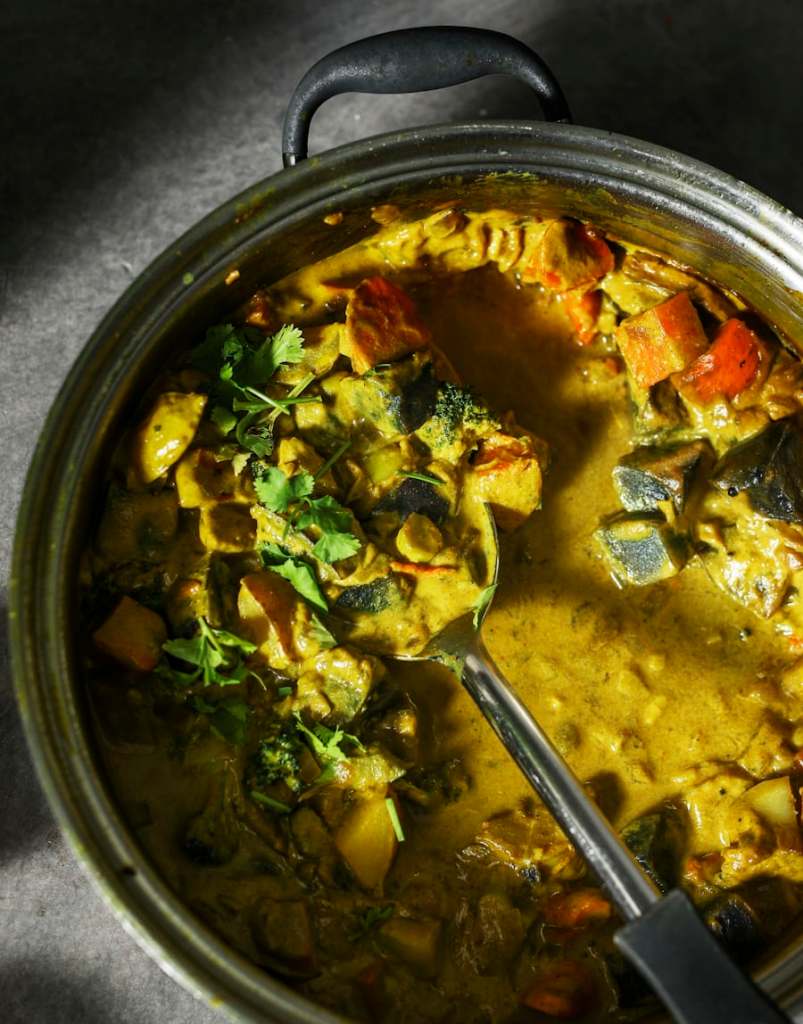
🥥 Use coconut in curries or chutneys

→ Especially good if you cook South Indian-style

🥛 Don’t fear full-fat dairy

→ A little curd, milk, or paneer adds both taste and nourishment

❤️ My Takeaway: Don’t Fear Fat. Understand It.

I’ve made peace with fat. I don’t pour oil like there’s no tomorrow, but I also don’t feel guilty for adding ghee to my dal.

I listen to my body, eat real food, and include good fat every single day — and it has made a difference.

If you’ve been avoiding oil thinking it’s the “healthy” choice, maybe it’s time to ask — is it making you feel better? Or just more restricted?

Balance is the real goal. Not fear. Not extremes. Just nourishment. 🌿

Hi, I’m Sonita — the voice behind Healthy Living Hub. I share simple, science-backed tips to live a healthier, more balanced life — one mindful choice at a time. 

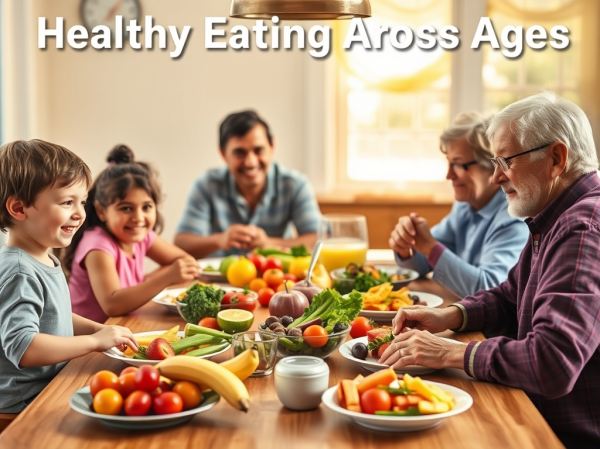
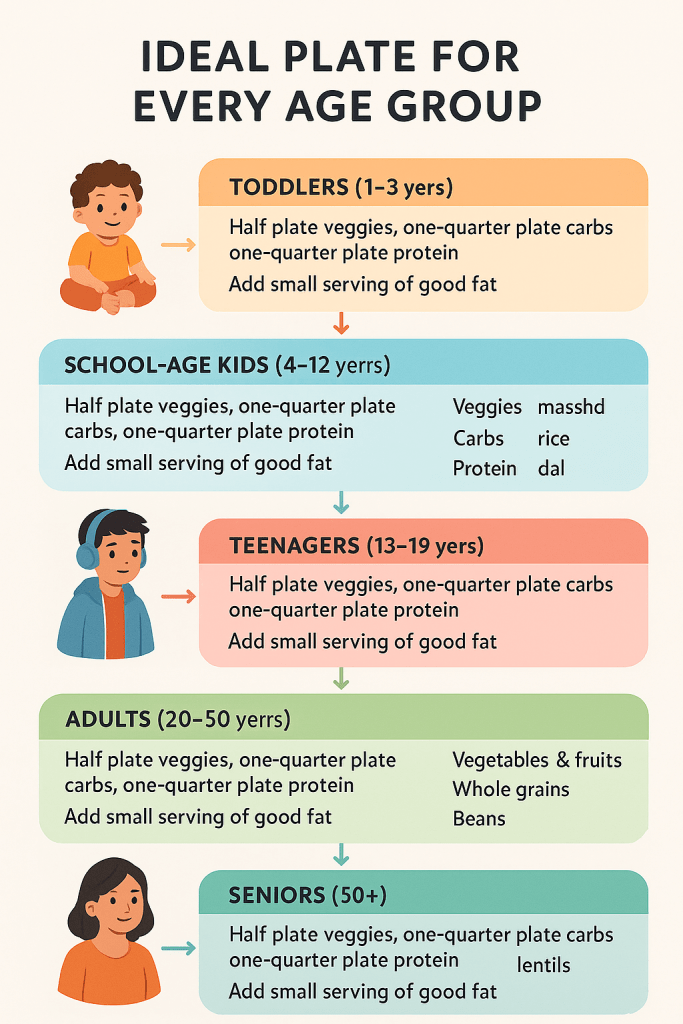
Healthy Eating Across Ages: Simple Strategies

Read this in your own language:

To read this post in your language, tap the three dots in your browser (on mobile) or right-click on the page (on a computer), and select “Translate”.

Or, copy the post link and open it in Google Translate.

If you enjoyed this post, don’t forget to Subscribe to Healthy Living Hub for more easy, practical health tips delivered to you!

Stay connected, stay healthy!

As a mother, daughter, and health enthusiast, I’ve realized one simple truth—our food needs change with age, but we often feed everyone in the family the same way. That’s why I’m sharing a simple, age-wise food guide that I’ve personally tried and seen results from.

Why This Matters

  • Kids are getting obese too early.
  • Teens are skipping meals.
  • Adults are eating stress, not food.
  • Seniors are losing strength silently.

Let’s change that—starting today.

Age-Wise Food Guide

1. Toddlers (1–3 years): Building Blocks

  • Small stomachs, big needs!
  • Focus on: Full-fat milk, mashed vegetables, soft fruits, rice, dal.
  • Avoid: Excess sugar or salt.

My tip: Mix vegetables into khichdi or soups—they’ll never notice!

2. School-Age Kids (4–12 years): Fuel for Growth

  • Growing fast and always active.
  • Focus on: Protein (eggs, lentils), calcium (milk, paneer), colorful veggies, whole grains.
  • Avoid: Packaged snacks, sugary drinks.

What to do: Replace Chips with roasted Makhana or Fruit sticks

3. Teenagers (13–19 years): Hormones & Hunger

  • Emotional, physical rollercoaster!
  • Focus on: Iron (green leafy veggies, dates), Protein (nuts, fish), Omega-3s.
  • Avoid: Skipping meals or surviving on instant noodles.

Your Children will love smoothies if you mix Cocoa Powder and call it Choco-Power -Drink

4. Adults (20–50 years): Balance & Stress Buster

  • Working long hours, sedentary lifestyle.
  • Focus on: Fiber (vegetables, fruits), Lean proteins, Healthy fats (nuts, seeds).
  • Avoid: Overeating at night, mindless snacking.

Working people prep meals in advance on Sundays – saves time and helps you stay on track.

5. Seniors (50+): Strength & Digestion Support

  • Nutrient absorption slows down.
  • Focus on: Calcium, Vitamin D, Easily digestible proteins, Hydration.
  • Avoid: Hard-to-digest fried food.

For Senior people like our parents make soft vegetable upma and warm haldi milk daily.

Simple Reminder for All Ages

Hi, I’m Sonita — the voice behind Healthy Living Hub. I share simple, science-backed tips to live a healthier, more balanced life — one mindful choice at a time. 
“I believe real health comes from small, consistent habits — not perfection.”

Unlocking the Power of Micronutrients: A Guide

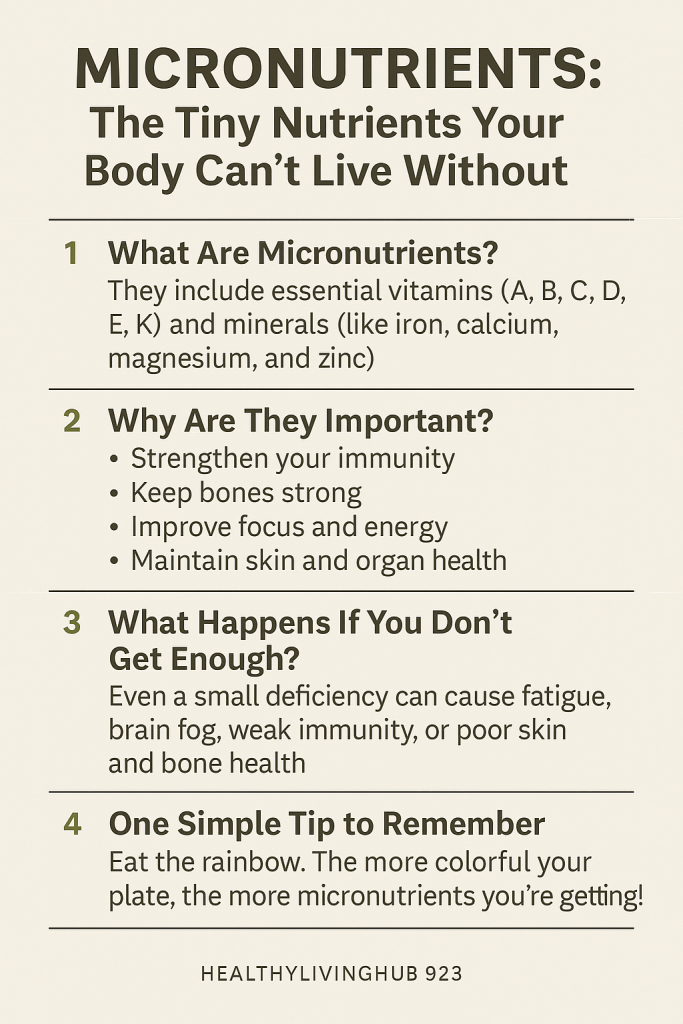
When we think about eating healthy, we often focus on carbs, proteins, and fats. But there’s a group of tiny nutrients that quietly do some of the biggest jobs in our body — micronutrients.

Let’s break them down step by step.

What Are Micronutrients?

Micronutrients are vitamins and minerals that our body needs in small amounts, but they are absolutely essential for:

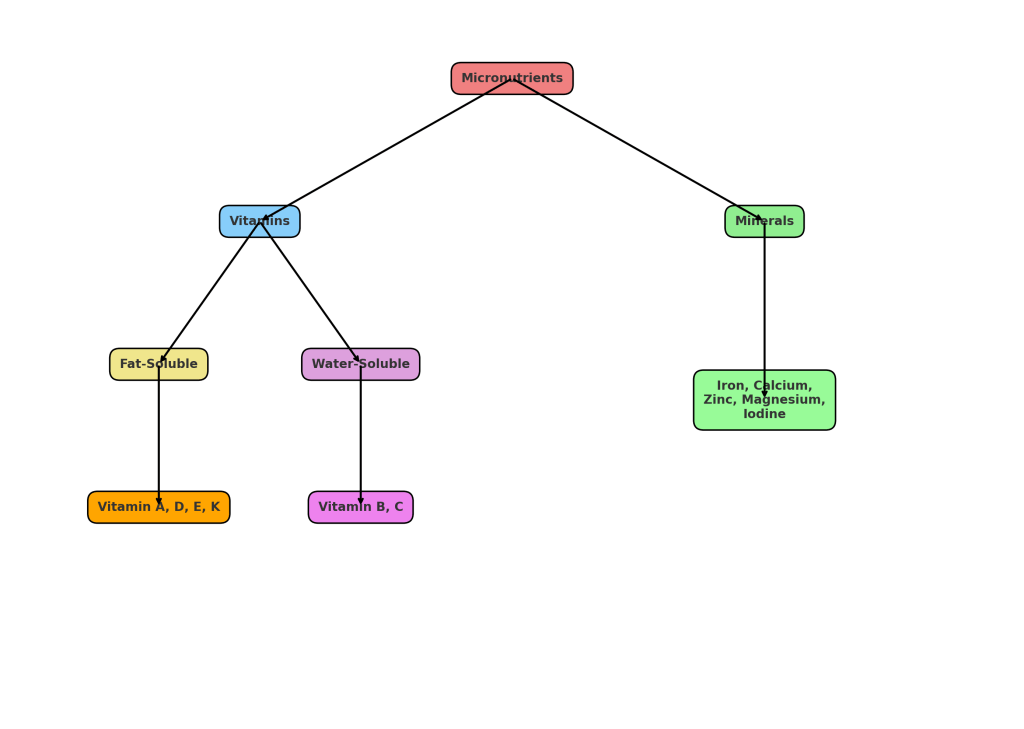
TWO MAIN TYPES OF MICRONUTRIENTS

1. Vitamins

 – The Helpers

a. Fat-Soluble Vitamins (stored in body fat)

b. Water-Soluble Vitamins (not stored – need daily)

  • Vitamin C – Immunity booster (citrus fruits, amla)
  • Vitamin B-complex – Helps energy and nerve health (whole grains, dairy, leafy greens)

2. Minerals

 – The Builders

Here are the most important ones:

Why Are Micronutrients Important?

Even a tiny deficiency can lead to:

How to Get Enough Micronutrients?

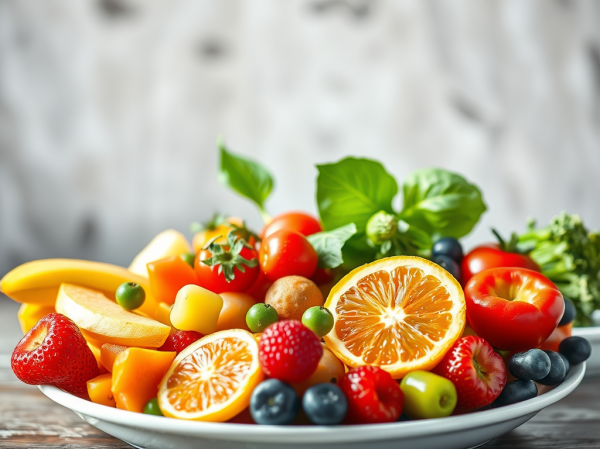
Simple rule: Eat a rainbow every day!

Final Thought

Hi, I’m Sonita — the voice behind Healthy Living Hub. I share simple, science-backed tips to live a healthier, more balanced life — one mindful choice at a time. 
“I believe real health comes from small, consistent habits — not perfection.”

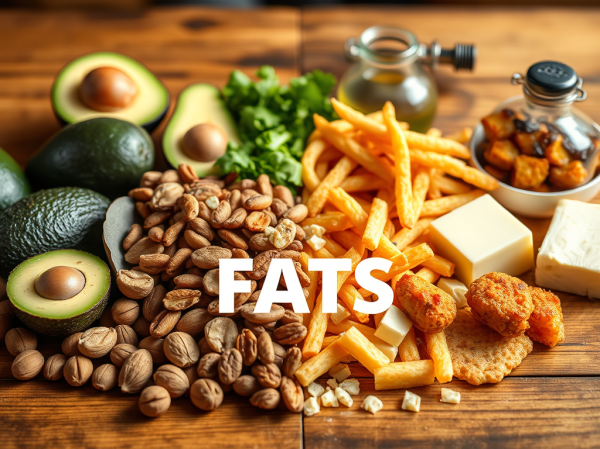
Understanding Fats: The Good, The Bad, and The Healthy

Fats – Friend or Foe? Understanding the Good and the Bad

When we hear the word fat, most of us think of weight gain, heart disease, or unhealthy eating. But the truth is — fats are essential for our body’s well-being. Let’s break it down simply.

Why Do We Need Fat?

Energy-dense: Fat provides 9 calories per gram, more than carbs or protein.

Vitamin Absorption: Helps absorb vitamins A, D, E, and K.

Hormone Health: Supports production of hormones like estrogen and testosterone.

Brain Power: Your brain is nearly 60% fat — it needs good fat to function.

Cell Structure & Skin: Fat is crucial for cell membranes and healthy skin.

Types of Fat – Know the Difference

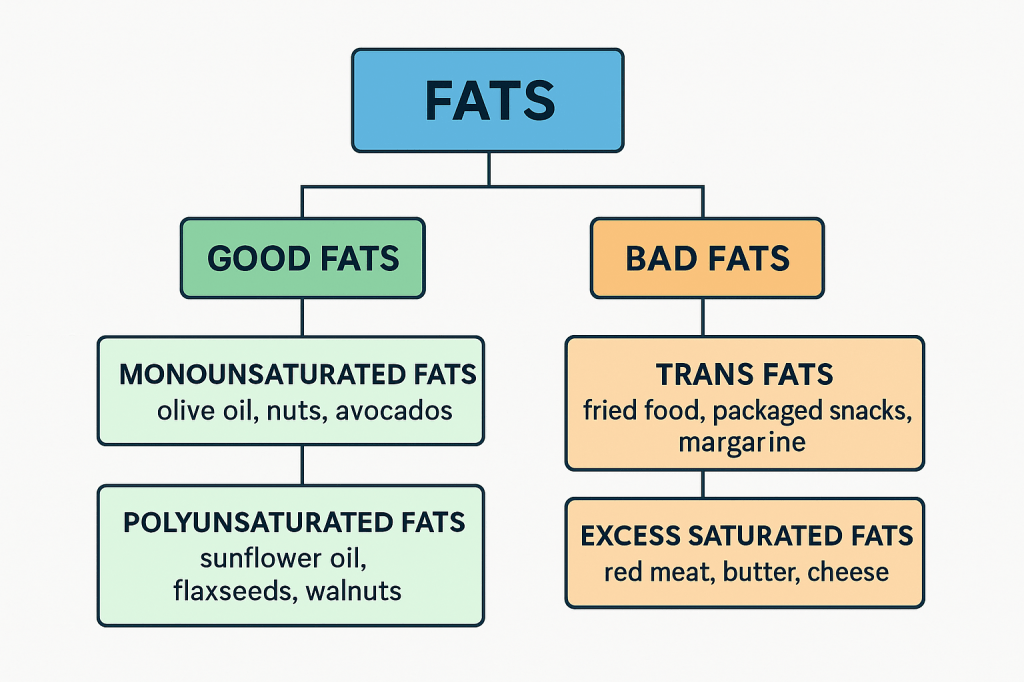
1. Good Fats (Healthy Fats)

These fats support heart and brain health and should be included in your diet:

Monounsaturated fats: olive oil, almonds, peanuts, avocados

Polyunsaturated fats:

Omega-3: fatty fish (salmon, mackerel), flaxseeds, walnuts

Omega-6: sunflower oil, soybean oil, tofu (but balance is key)

2. Bad Fats (Unhealthy Fats)

These increase your risk of heart disease and should be minimized:

Trans fats: found in fried foods, packaged snacks, baked goods

Excess saturated fats: from fatty meat, butter, cheese — small amounts are okay, but don’t overdo it

How Much Fat Do You Need?

According to Harvard Health and WHO guidelines:

20–35% of your daily calories should come from fat

• Prioritize unsaturated fats (plant-based oils, nuts, fish)

• Limit saturated fats to less than 10% of daily calories

Avoid trans fats completely

What Happens If You Eat Too Much or Too Little Fat?

Too Much Fat Too Little Fat

Weight gain Poor vitamin absorption

High cholesterol Hormonal imbalance

Risk of heart disease Dry skin and hair

Fatty liver Fatigue and brain fog

Latest Research Insights (2024–2025)

Not all saturated fats are equally harmful — coconut oil and dairy fat may have neutral effects.

Ultra-processed foods with added fats are more dangerous than natural fat sources.

Balanced omega-6 and omega-3 ratio is vital — modern diets often have too much omega-6.

Ketogenic diets (high-fat, low-carb) can help with weight loss and insulin resistance but must be done under supervision.

Final Takeaway – Don’t Fear Fat, Choose Wisely

Fat isn’t your enemy. It’s about quality and balance. Focus on whole food sources, cook smart, and avoid processed junk. Your heart, brain, and body will thank you.

Hi, I’m Sonita — the voice behind Healthy Living Hub. I share simple, science-backed tips to live a healthier, more balanced life — one mindful choice at a time. 
“I believe real health comes from small, consistent habits — not perfection.”

Blog at WordPress.com.

Up ↑