
⸻
Fats – Friend or Foe? Understanding the Good and the Bad
When we hear the word fat, most of us think of weight gain, heart disease, or unhealthy eating. But the truth is — fats are essential for our body’s well-being. Let’s break it down simply.
Why Do We Need Fat?
• Energy-dense: Fat provides 9 calories per gram, more than carbs or protein.
• Vitamin Absorption: Helps absorb vitamins A, D, E, and K.
• Hormone Health: Supports production of hormones like estrogen and testosterone.
• Brain Power: Your brain is nearly 60% fat — it needs good fat to function.
• Cell Structure & Skin: Fat is crucial for cell membranes and healthy skin.
Types of Fat – Know the Difference
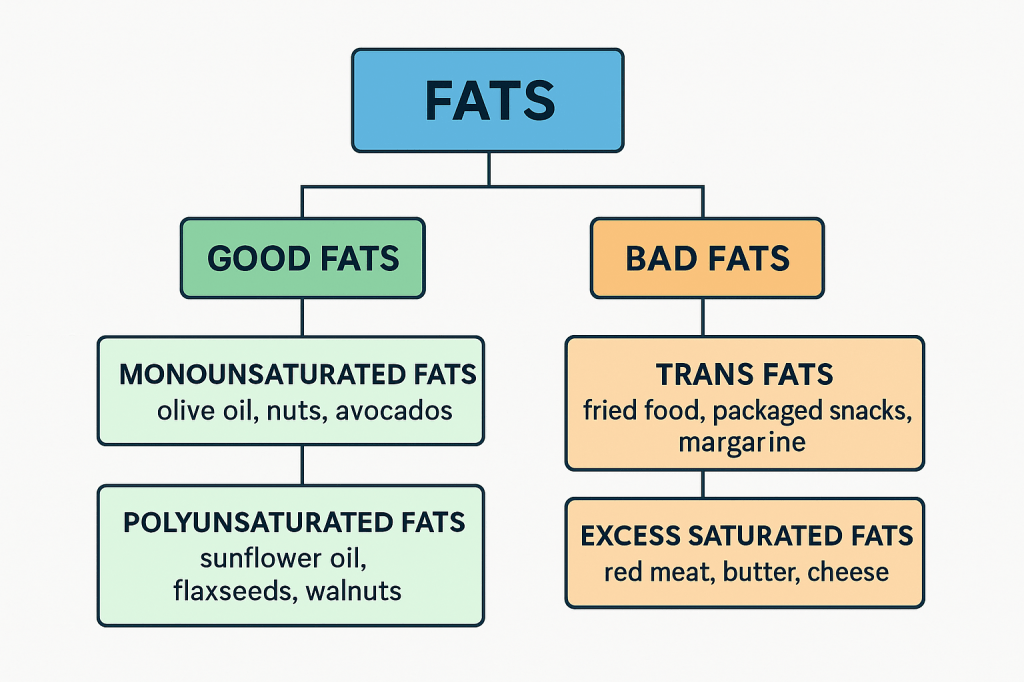
1. Good Fats (Healthy Fats)
These fats support heart and brain health and should be included in your diet:
• Monounsaturated fats: olive oil, almonds, peanuts, avocados
• Polyunsaturated fats:
• Omega-3: fatty fish (salmon, mackerel), flaxseeds, walnuts
• Omega-6: sunflower oil, soybean oil, tofu (but balance is key)
2. Bad Fats (Unhealthy Fats)
These increase your risk of heart disease and should be minimized:
• Trans fats: found in fried foods, packaged snacks, baked goods
• Excess saturated fats: from fatty meat, butter, cheese — small amounts are okay, but don’t overdo it
How Much Fat Do You Need?
According to Harvard Health and WHO guidelines:
• 20–35% of your daily calories should come from fat
• Prioritize unsaturated fats (plant-based oils, nuts, fish)
• Limit saturated fats to less than 10% of daily calories
• Avoid trans fats completely
What Happens If You Eat Too Much or Too Little Fat?
Too Much Fat Too Little Fat
Weight gain Poor vitamin absorption
High cholesterol Hormonal imbalance
Risk of heart disease Dry skin and hair
Fatty liver Fatigue and brain fog
Latest Research Insights (2024–2025)
• Not all saturated fats are equally harmful — coconut oil and dairy fat may have neutral effects.
• Ultra-processed foods with added fats are more dangerous than natural fat sources.
• Balanced omega-6 and omega-3 ratio is vital — modern diets often have too much omega-6.
• Ketogenic diets (high-fat, low-carb) can help with weight loss and insulin resistance but must be done under supervision.
Final Takeaway – Don’t Fear Fat, Choose Wisely
Fat isn’t your enemy. It’s about quality and balance. Focus on whole food sources, cook smart, and avoid processed junk. Your heart, brain, and body will thank you.
Hi, I’m Sonita — the voice behind Healthy Living Hub. I share simple, science-backed tips to live a healthier, more balanced life — one mindful choice at a time.
“I believe real health comes from small, consistent habits — not perfection.”
 Healthy Living Hub