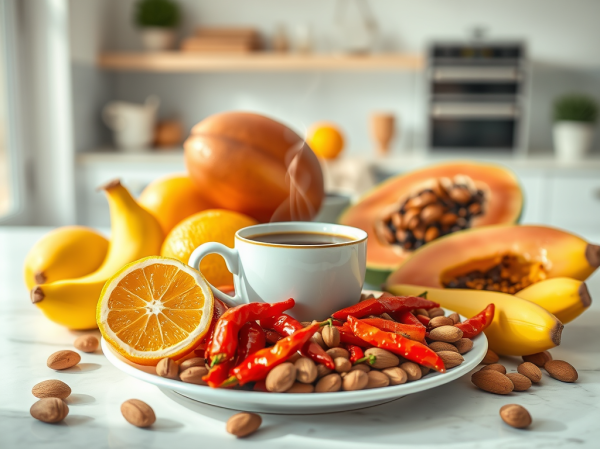
Foods to Avoid on an Empty Stomach

What you eat on an empty stomach can either support your digestion… or irritate it.

Many people think all “healthy” foods are safe first thing in the morning, but some foods can actually cause acidity, bloating, or discomfort when eaten on an empty stomach.

Here are three foods you should avoid first thing in the morning, and why they may not be the best choice before breakfast.

1. Citrus Fruits (Oranges, Lemons, Sweet Lime)

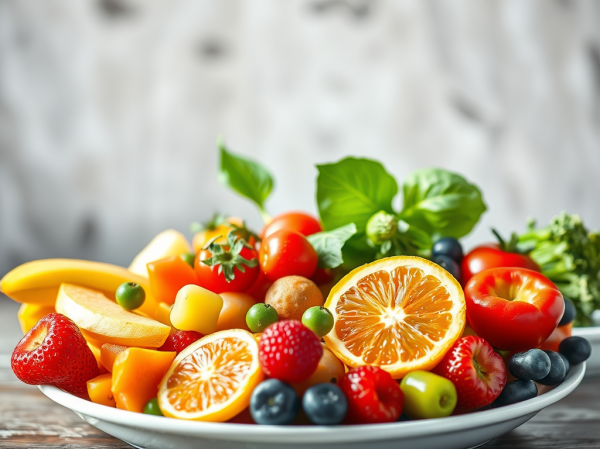
Citrus fruits are packed with vitamin C and antioxidants — they’re great, but not when your stomach is empty.

Why avoid them early morning?

  • They contain strong natural acids
  • These acids can irritate your stomach lining
  • May trigger heartburn or a burning sensation
  • Can worsen acidity if you’re already prone to it

Better alternative:

Start with banana, papaya, or soaked almonds — these are gentle and soothing.

2. Coffee First Thing in the Morning

For many people, coffee is the first thing they reach for.

But drinking coffee on an empty stomach can do more harm than you think.

Why it’s not ideal:

  • Coffee increases stomach acid
  • Can cause acidity or burning
  • May lead to anxiety or shakiness
  • Can irritate the gut if taken before any food

Better routine:

Have a small snack or breakfast before your coffee — even a handful of nuts helps.

3. Spicy Foods

Starting your day with spicy food forces your stomach to work harder when it should be easing into digestion.

Why avoid it in the morning:

  • Can irritate the stomach lining
  • May cause bloating
  • Increases chances of acidity
  • Not ideal before your digestive system “wakes up”

Better alternative:

Choose warm water, fruit, oats, or light breakfast foods to gently activate digestion.

✔️ 

A Simple Rule for a Happier Stomach

Your stomach is most sensitive in the morning.

So choose foods that are:

✔ Easy to digest

✔ Gentle

✔ Low in acidity

✔ Not too spicy or caffeinated

Starting your day with the right foods can keep your digestion smooth and your energy steady.

❤️ 

Final Thoughts

Small changes in your morning eating habits can make a big difference to your gut health.

Listen to your body, keep your mornings gentle, and your stomach will thank you!

https://youtube.com/shorts/tjKaNAOdhsQ?si=X-hnz9S3r6ZJY4hi

Intermittent Fasting vs. Skipping Breakfast: What You Need to Know

Many people skip breakfast thinking it helps with weight loss — but your body reacts very differently when breakfast is skipped randomly versus intentionally through Intermittent Fasting. In this post, I’ll explain what actually happens to your energy, metabolism, and cravings when you skip breakfast, and who can safely skip it as part of a planned fasting routine. 🌿


Skipping Breakfast — Harmless Habit or Hidden Problem?

Hi! I’m Sonita, and welcome to Healthy Living Hub 💚

If you’re someone who often skips breakfast because you’re busy — or because you think it’ll help you lose weight — this post is for you.

Let’s understand what really happens in your body when breakfast is missing… and how it changes when you’re doing intermittent fasting intentionally.

1. Your Blood Sugar Drops

After 8–10 hours of sleep, your body is waiting for fuel.

Skipping breakfast keeps your blood sugar low, which can make you:

  • Tired
  • Irritable
  • Foggy
  • Craving sweets or junk

That mid-morning tiredness?

That’s your body asking for breakfast.

2. Your Metabolism Slows Down

Many people skip breakfast hoping to burn fat.

But actually, your body does the opposite — it slows down energy burn to “save” calories.

This means you may end up storing more fat, not burning it.

3. More Cravings Later

When you skip breakfast randomly, the body will push you towards quick energy —

usually sugary or salty snacks.

Most people eat more calories later without realising it.

But What If You’re Doing Intermittent Fasting (IF)?

This is where the story changes…

Intermittent Fasting involves a planned eating window (like 16:8 or 14:10).

In this case, skipping breakfast is not careless — it’s part of a routine.

✔ When skipping breakfast 

IS OKAY

If you are:

  • Following a proper fasting window
  • Eating balanced meals during your eating time
  • Staying hydrated
  • Feeling energetic and comfortable
  • Not doing it randomly

Then skipping breakfast is perfectly fine — your body adjusts smoothly.

When Intermittent Fasting Is NOT Suitable

IF may not suit you if you have:

  • Low blood sugar
  • Thyroid issues
  • Acid reflux
  • Irregular eating habits
  • Pregnancy or breastfeeding
  • Weakness / dizziness

In these cases, eating breakfast is important.

Bottom Line

Skipping breakfast randomly slows your metabolism and affects your energy.

Skipping breakfast as part of intermittent fasting can be safe —

if your body is comfortable and your routine is consistent.

Listen to your body.

Give it what it needs.And start your mornings with care

Read More on Healthy Living Hub

👉 What Happens When You Eat Too Fast

👉 5 Simple Habits for Mindful Eating

👉 Healthy Morning Routine Tips

Watch here 👇

https://youtu.be/zoDh1w9tUWA?si=l4c23R7vi0V4QYi_

Transform Your Meals with Mindful Eating

by Sonita | Healthy Living Hub

Have you ever finished a meal and realised…

you don’t even remember how it tasted?

Maybe you were scrolling through your phone, replying to messages, or watching TV.

Before you knew it, your plate was empty — but your mind was still hungry.

I used to eat like that almost every day.

Lunch with emails waiting. Dinner with the television playing in the background.

I thought I was saving time, but what I was really doing was losing something precious —

my connection with food, and with myself. 🌸

💧 The Moment of Realisation

One day, I noticed something odd.

My stomach was full, but I still felt tired… uneasy… unsatisfied.

It wasn’t the food — it was how I was eating.

That simple awareness became the start of a quiet transformation.

I discovered mindful eating — and it changed how I looked at every meal.

🌿 What Is Mindful Eating?

Mindful eating isn’t a diet.

It has nothing to do with calorie counts or restrictions.

It’s about being present — using all your senses to truly experience your food.

It means slowing down enough to notice:

  • the colors and textures on your plate,
  • the aroma that greets you,
  • the taste that changes with every bite,
  • and the gentle signals your body sends when it’s satisfied.

When we eat mindfully, something beautiful happens —

our body begins to listen again.

☀️ The Science Behind It

Our brain and gut are constantly communicating, through a network of nerves and hormones.

When we eat in a hurry or while stressed, digestion slows down.

Our body produces fewer enzymes, which can lead to bloating, tiredness, or even cravings right after a meal.

But when we eat slowly and calmly,

our nervous system shifts into a relaxed state —

our gut digests better, and our mind feels clearer. 🌿

Science and mindfulness say the same thing:

Your body understands food best when you eat with awareness.

🌸 How I Started

I began small.

I started by keeping my phone away during meals.

No screens. No notifications. Just quiet time with my food.

At first, it felt strange — almost too quiet.

But soon, I began to enjoy that silence.

I could taste my food again.

I knew when I was full.

And for the first time in a long while, eating felt peaceful.

Gradually, eating became less of a routine and more of a moment of gratitude.

💫 5 Simple Habits for Mindful Eating

🌿 1. Sit while eating.

It tells your body it’s time to rest and receive.

🌿 2. Take smaller bites and chew slowly.

Your brain needs time to register satisfaction.

🌿 3. Put down your spoon or fork between bites.

It helps you slow your rhythm naturally.

🌿 4. Avoid screens and distractions.

Let your meal have your full attention — even for just ten quiet minutes.

🌿 5. Begin with gratitude.

Thank your food, the hands that prepared it, and your body that receives it.

🌿 Why It Matters

Mindful eating is not about perfection — it’s about presence.

Even one mindful meal a day can reset how your body digests,

how your mind feels, and how your day flows.

Eating isn’t just about filling hunger.

It’s about connection — with your food, your emotions, and your inner calm.

So next time you sit down to eat…

pause for a moment.

Take a breath.

Taste your food.

Because every mindful bite is a step toward better health — and a calmer you. 🌸

💧 Read, Watch, and Practice

You can also watch my YouTube video on this topic:

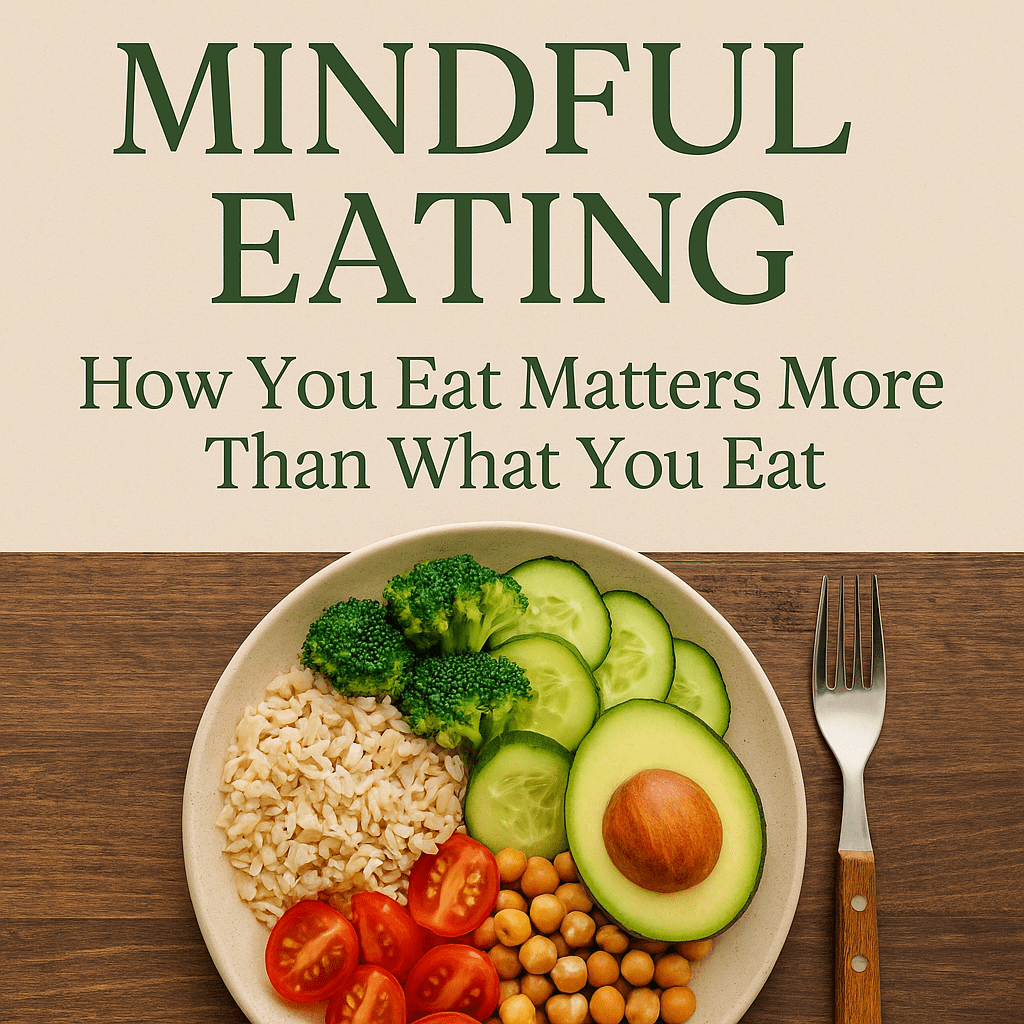
🎥 Mindful Eating – How You Eat Matters More Than What You Eat

👉 Healthy Living Hub by Sonita on YouTube

For more such mindful health stories, visit my blog homepage:

🌿 https://healthylivinghub923.blog

Stay mindful. Stay nourished. 💕

— Sonita, Healthy Living Hub

Smart Fat Choices for a Balanced Diet

How Much Fat Do We Really Need? Busting Myths, Oil-Free Diets & Smart Fat Choices

After writing about fats on my blog earlier, many of you asked:

“But how much fat is enough?”

“Is oil-free cooking better?”

“How can I eat good fat without overdoing it?”

Trust me — I’ve had the same questions. For years, I thought using less oil meant I was doing something good for my body. But over time, I realized: it’s not that simple.

So in this post, I’m sharing what I’ve learned — from nutrition research, conversations with doctors, and most importantly, from my own experience.

🧠 How Much Fat Do We Actually Need?

We all need fat. Yes, need — not just want!

According to experts, 20–35% of our daily calories should come from fat. For someone eating 2,000 calories a day, that’s roughly 45–75 grams of fat.

Here’s what that looks like in real life:

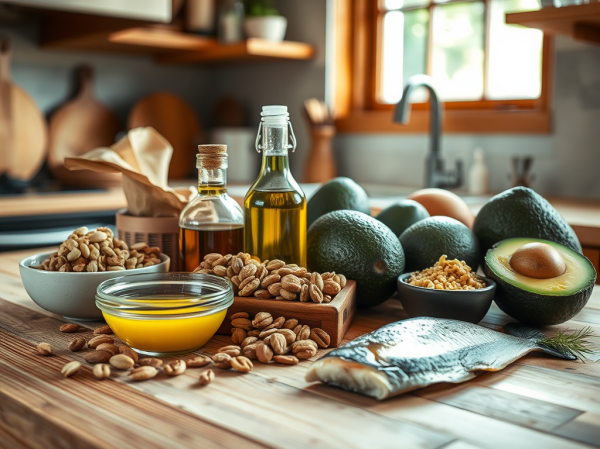
  • 1 tbsp of oil/ghee → 13–15g fat
  • A handful of almonds or peanuts → 14g fat
  • 2 tbsp peanut butter → 16g fat
  • 1 egg → 5g fat
  • 1 tbsp ground flaxseeds → 4g fat

So if your meals include a bit of oil or ghee, a few nuts, a boiled egg, or even some fish — you’re already covering your needs without even trying.

❌ The Truth About Oil-Free Diets

I’ve seen a lot of buzz around “oil-free cooking” — and I’ve even tried it myself. While it might help some people cut down on calories or manage cholesterol, completely eliminating oil is not necessary for everyone — and in many cases, not even ideal.

When we remove all fat from our food, here’s what can happen:

  • Dry, dull skin
  • Constant tiredness or “brain fog”
  • Mood swings
  • Poor absorption of vitamins like A, D, E & K
  • Irregular periods or hormonal issues

Instead of going oil-free, I now cook with measured, good-quality fats — and I’ve noticed better energy, glowing skin, and a fuller tummy after meals. No guilt!

✅ My Simple Ways to Add Healthy Fat (Without Overdoing Oil)

I don’t fry much anymore — but I do add fat smartly. Here are some easy ways I include good fats in my meals every single day:

🍳 Start your day with nuts/seeds

→ Soaked almonds, walnuts, chia, or ground flaxseeds in smoothies or curd

🥗 Use 1 tsp of oil for tadka or sautéing

→ Mustard oil or cold-pressed sesame oil is my go-to

🍚 Add a little homemade ghee to rice or roti

→ It makes food delicious and satisfying

🐟 Include fatty fish when possible

→ I love fish cooked in mustard oil — rich in omega-3 and super Bengali!

🥥 Use coconut in curries or chutneys

→ Especially good if you cook South Indian-style

🥛 Don’t fear full-fat dairy

→ A little curd, milk, or paneer adds both taste and nourishment

❤️ My Takeaway: Don’t Fear Fat. Understand It.

I’ve made peace with fat. I don’t pour oil like there’s no tomorrow, but I also don’t feel guilty for adding ghee to my dal.

I listen to my body, eat real food, and include good fat every single day — and it has made a difference.

If you’ve been avoiding oil thinking it’s the “healthy” choice, maybe it’s time to ask — is it making you feel better? Or just more restricted?

Balance is the real goal. Not fear. Not extremes. Just nourishment. 🌿

Hi, I’m Sonita — the voice behind Healthy Living Hub. I share simple, science-backed tips to live a healthier, more balanced life — one mindful choice at a time. 

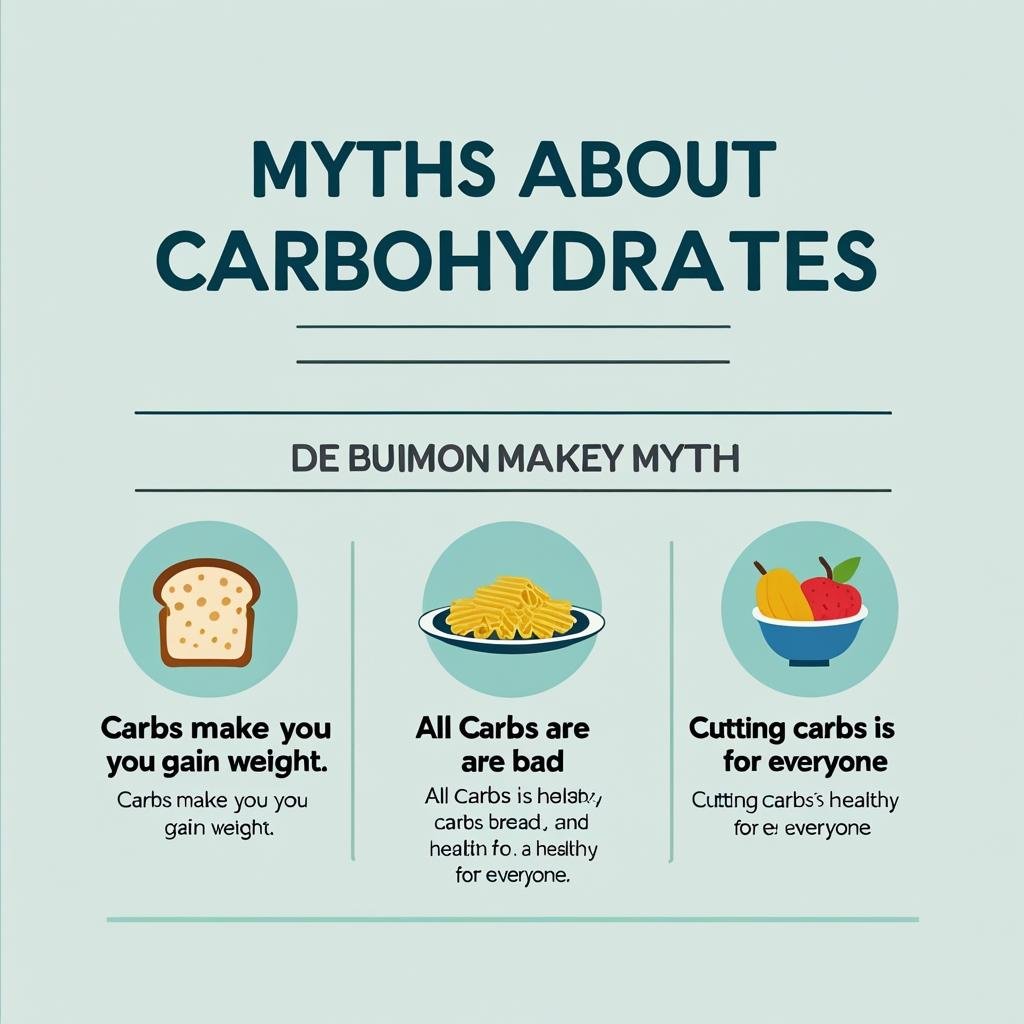
Are Carbs Really Bad? Myths vs. Facts Explained

Carbs get blamed for everything — from weight gain to energy crashes. But are they really the villain in your diet story?

Truth Bomb!

No way! Overeating anything — whether carbs, protein, or fat — can lead to weight gain. The key is balance.

Smart carbs like whole grains, vegetables, and legumes are rich in fiber, helping us feel full longer and curb overeating.

Truth Bomb!

Big misconception! All carbs are not created equal.

NO TO – Candy, sodas, and white bread, which are refined carbs with little nutrition.

Fruits, quinoa, oats, brown rice are all complex carbs packed with fiber, vitamins, and minerals.

Truth Bomb!

Cutting carbs means cutting our body’s main energy source!

Our brain runs on glucose (a carb), and without enough, we can feel foggy, moody, and tired.

Balanced carbs are fuel for workouts, boost mood, and even aid in hormone regulation.

Truth Bomb!

Our body doesn’t wear a watch!

Weight gain depends on how much we eat overall, not when.

Truth Bomb!

Only refined carbs and added sugars cause quick blood sugar spikes and crashes.

Complex carbs are digested slowly, giving us steady, lasting energy.

The fiber in whole foods like beans, lentils, and veggies keeps blood sugar stable and hunger at bay.

Cool Fact: A high-fiber breakfast with healthy carbs has been linked to better focus and memory during the day.

BOTTOM LINE:

Don’t fear carbs — master them! Choose whole, fiber-rich carbs, keep your portions in check, and watch how our energy, mood, and health improve.

Our body loves carbs — especially the smart kind. And yes, our taste buds will thank you too!

Hi, I’m Sonita — the voice behind Healthy Living Hub. I share simple, science-backed tips to live a healthier, more balanced life — one mindful choice at a time. 
“I believe real health comes from small, consistent habits — not perfection.”

Unlocking the Power of Protein: Myths and Facts

Protein Power: Your Body’s Unsung Hero (And How to Get It Right!)

Ever wonder why everyone is suddenly obsessed with protein? It’s not just for gym freaks and bodybuilders! Protein is our body’s silent superhero — fixing, fueling, and protecting you 24/7. From glowing skin to strong muscles, it’s working behind the scenes in ways you’ve probably never imagined.

In this post, I shall break down the real magic of protein — why we need it, what happens when we don’t get enough (or too much), and why half the stuff you’ve heard about it might be… well, just myths.

What Does Protein Actually Do for You?

Think of protein as your body’s master builder and fixer-upper. It’s not just about muscles — protein does a lot more than you think:

Builds and Repairs

From muscles to skin, hair to nails — protein is the construction crew that keeps our body in top shape.

Creates Enzymes & Hormones

These tiny messengers control digestion, mood, sleep, and even how fast you grow.

Strengthens Your Immune Army

Protein makes antibodies — the little soldiers that fight off germs and keep you healthy.

Transports Nutrients

Some proteins act like taxis, carrying oxygen, vitamins, and minerals to where they’re needed.

Provides Backup Energy

When carbs and fats run low, protein steps in to give you fuel.

Keeps You Feeling Full

Protein fills you up and keeps cravings at bay — hello, smarter snacking!

Even a mild protein deficiency can mess with your body in sneaky ways:

Muscle Loss & Weakness

Hair Thinning, Weak Nails

Frequent Illness

Swelling (Edema)

Slow Wound Healing

Constant Cravings

Feeling tired, getting sick a lot, or always hungry? Your body might be quietly begging for more protein.

Can You Get Too Much Protein?

Yup! While protein is great, more isn’t always better. Going overboard can lead to:

Kidney Strain (especially if you already have kidney issues)

Dehydration

Digestive Troubles (like constipation)

Nutrient Imbalance (less room for fruits, veggies, grains)

Weight Gain (yep, extra protein = extra calories)

Balance is key! Most adults need around 0.8 grams of protein per kg of body weight. That’s about 56g per day if you weigh 70 kg.

Protein Myths Busted!

Let’s clear the air. You’ve probably heard these before — but are they true?

Myth 1: You need tons of protein to build muscle.

Truth: You need enough protein and regular strength training — not heaps of it.

Myth 2: Plant protein isn’t complete.

Truth: It’s totally complete when you eat a mix of plant-based foods over the day.

Myth 3: High protein = weak bones.

Truth: The latest science says adequate protein actually strengthens bones, not weakens them.

Myth 4: Protein shakes are a must.

Truth: Handy, yes. Necessary? Nope. Whole foods work just fine.

Myth 5: All protein is equal.

Truth: Lean meats, beans, nuts > fried chicken nuggets and processed meats. Quality matters!

So, Where Should You Get Your Protein?

Mix it up with both animal and plant-based sources:

Animal Proteins

Chicken breast, eggs, fish, Greek yogurt, lean beef, milk, cottage cheese.

Plant Proteins

Lentils, chickpeas, tofu, tempeh, quinoa, nuts, seeds, edamame, nutritional yeast.

The Bottom Line: Make Protein Your Daily Partner

Protein is not just a trend — it’s a life essential. Include a bit in every meal and snack to feel stronger, stay full longer, and power your body right. It’s one of the smartest health choices you can make.

Liked this post? 💚

Share it with someone who thinks protein is “just for gym bros.”

And don’t forget to follow my blog HealthyLivingHub923.blog for more fun, no-nonsense health tips that actually make sense.

Hi, I’m Sonita — the voice behind Healthy Living Hub. I share simple, science-backed tips to live a healthier, more balanced life — one mindful choice at a time. 
“I believe real health comes from small, consistent habits — not perfection.”

Navigating the Confusion of Health Trends

I don’t know about you, but I’ve often felt completely lost in today’s sea of health advi

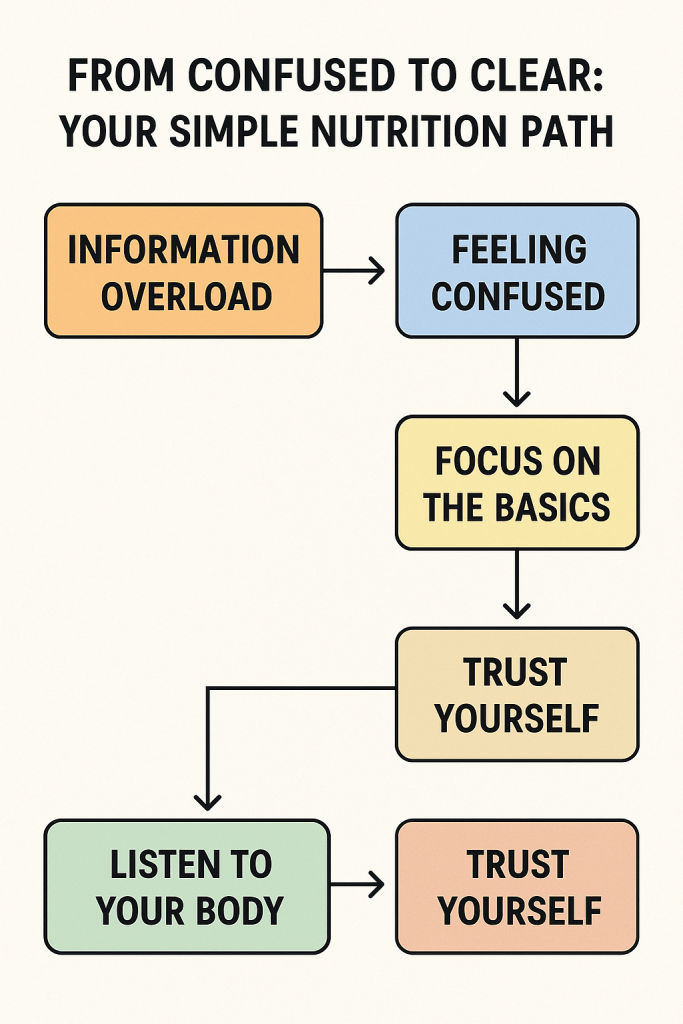
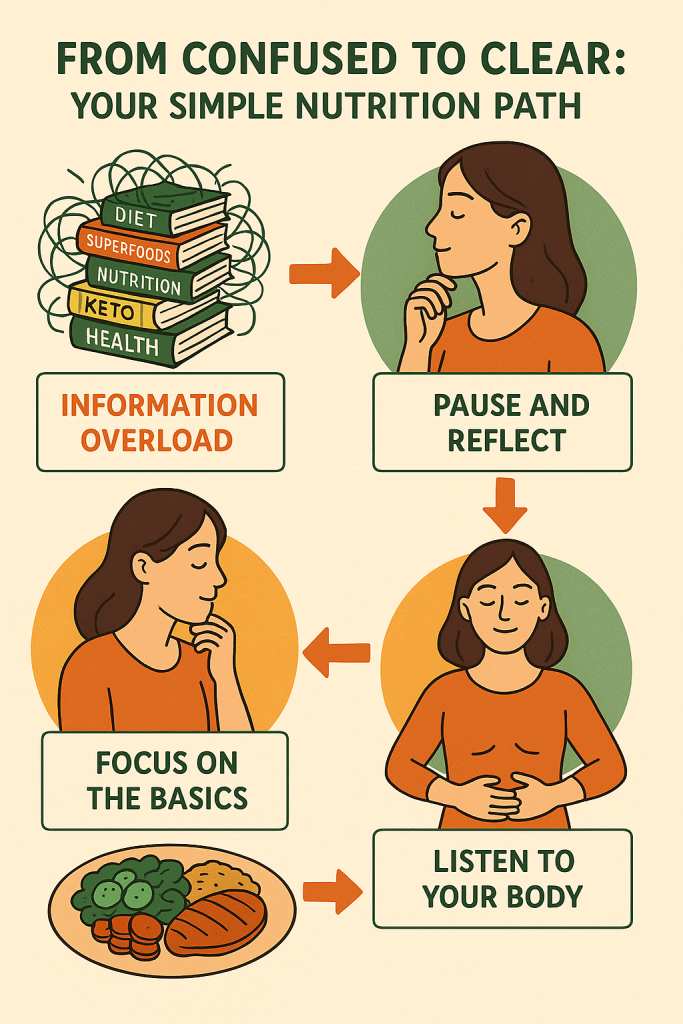
One day we’re told to go low-carb, the next day it’s “carbs are your best friend.” Then suddenly everyone’s drinking celery juice, and I wonder—is it me or has health become more confusing than helpful?

1. I Was Drowning in “Healthy Tips”

Every time I opened Instagram or YouTube, I was flooded with new suggestions:

  • Eat only before sunset.
  • Don’t eat fruits after meals.
  • Skip rice.
  • Rice is okay if it’s brown.
  • No, even brown rice has sugar!

I was tired. Not physically, but mentally. I started second-guessing everything I ate, even home-cooked food. And that’s when I realized—too much health advice was slowly taking away my peace.

2. Not Every Trend Is for Everyone

At one point, I tried following everything I read or watched. Result? I was skipping real meals, overloading on so-called “superfoods,” and feeling guilty all the time.

But my body wasn’t happy. Neither was my mind.

Then I remembered something I used to say often when I was part of the health network industry:

“No diet works unless it suits your lifestyle and your body.”

It was time to listen to that again.

3. What Actually Works (And It’s Not Complicated)

After many trials (and errors), I came back to the basics:

  • Eat fresh and homemade as much as possible.
  • Follow a routine that suits you—not the influencer with 6-pack abs.
  • Drink enough water.
  • Walk. Breathe. Sleep well.

Nothing fancy. But guess what? It works. I started feeling better—lighter, calmer, and most importantly, free from the pressure of doing everything “perfectly.”

4. A Gentle Reminder—You Know More Than You Think

Sometimes, we know what’s best for us—we’ve just stopped trusting ourselves.

So next time you see a shiny new health trend, pause and ask:

“Is this for me? Or am I just being pulled into the noise again?”

I’m not a doctor. I’m just a woman who has made her share of health mistakes—and learnt from them. If you’ve ever felt confused or overwhelmed, you’re not alone. Share your thoughts in the comments—I’d love to hear how you deal with the “nutrition noise” around you.

Let’s support each other in making health simple again.

“What Helped Me, My Personal Finds”. It might help you also:

When I followed a high-protein diet, I struggled with digestion — until I found this digestive enzyme that really helped.

To understand which foods suit me best, I started writing things down in a wellness journal. Here’s the one I use. It really helped me listen to my body better.

I once avoided fats completely, but adding healthy oils like this cold-pressed olive oil made my meals tastier and my energy more stable.

Note for transparency:

This post contains affiliate links. If you buy through them, I may earn a small commission — at no extra cost to you. Thank you for supporting Healthy Living Hub!

Hi, I’m Sonita — the voice behind Healthy Living Hub. I share simple, science-backed tips to live a healthier, more balanced life — one mindful choice at a time. 
“I believe real health comes from small, consistent habits — not perfection.”

Why One Diet Doesn’t Fit All: Trust Your Body

Why One Diet Doesn’t Fit All: Trust Your Body

Introduction

We live in a world full of diet charts, food rules, and endless advice. Keto, vegan, low-carb, high-protein — the list never ends. For a while, it feels exciting to try something new. But then reality sets in: the same diet that made your friend glow might leave you feeling tired, moody, or even unwell.

Here’s the truth: what works for one person may not work for another. That’s because our bodies are unique — with different genetics, lifestyles, stress levels, and even emotions. The secret is not to copy every new diet trend, but to pause, listen, and trust your body’s signals.

Our Body Speaks in Small Whispers

Your body already tells you what it needs. That afternoon headache may not require another cup of coffee, but simply a glass of water. Constant yawning may not mean you’re lazy, but that your body is asking for rest.

When we ignore these signals and try to “force” ourselves into a diet plan that doesn’t suit us, we end up feeling worse. But when we respect these small whispers, we discover that our body is the best nutritionist we’ll ever have.

Eating with Awareness

Most diet plans tell us what and when to eat, often ignoring how we feel. But food is deeply personal. For some, rice gives comfort and energy. For others, it feels heavy. One person may thrive on dairy, while another feels bloated.

I’ve started pausing before meals and asking myself: Am I truly hungry, or just bored or stressed? That one question has changed my choices. Eating with awareness helps us find the foods that energize us instead of blindly following a chart.

Movement, Not Punishment

Diet and exercise often come as a package deal — “burn calories, earn your food.” But movement should never be punishment. Just like diet, the right exercise looks different for each of us.

For some, it’s lifting weights. For others, it’s walking in the park, dancing in the living room, or stretching on the floor. The important thing is not what others are doing, but what feels good and sustainable to you.

Rest is Productive Too

Here’s something most diet books don’t tell you: no diet will work if you’re sleep-deprived and exhausted. Your metabolism, hormones, and even cravings are deeply connected to rest.

When your body says, “Stop. Breathe. Sleep.” — that’s not laziness. That’s healing. Rest is not a break from progress; it’s a part of it.

A Small Daily Check-In

To stay tuned into your body, I use three simple questions at the end of each day:

  1. Did I eat in a way that gave me energy?
  2. Did I move in a way that felt good?
  3. Did I allow myself enough rest?

Most days, I don’t get all three perfect. But the act of checking in keeps me honest, and slowly, my body and mind feel more balanced.

Conclusion

The next time you’re tempted to follow the latest diet trend, pause and ask yourself: “But what does my body say?”

Because one diet can’t fit all — and your body already has the wisdom you need. Trust it. Nourish it. And let it guide you to health, your way. 💙

Found this helpful?

You can read this post in your own language — just tap the three dots in your browser and choose Translate, or open the post in Google Translate.

Want more real, practical health tips like this?

Subscribe to Healthy Living Hub — because your health journey should feel personal, not confusing.

Hi, I’m Sonita — the voice behind Healthy Living Hub. I share simple, science-backed tips to live a healthier, more balanced life — one mindful choice at a time. 
“I believe real health comes from small, consistent habits — not perfection.”

Healthy Eating Across Ages: Simple Strategies

Read this in your own language:

To read this post in your language, tap the three dots in your browser (on mobile) or right-click on the page (on a computer), and select “Translate”.

Or, copy the post link and open it in Google Translate.

If you enjoyed this post, don’t forget to Subscribe to Healthy Living Hub for more easy, practical health tips delivered to you!

Stay connected, stay healthy!

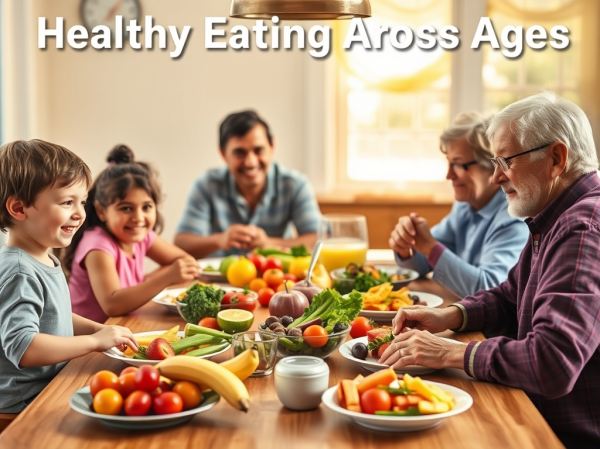
As a mother, daughter, and health enthusiast, I’ve realized one simple truth—our food needs change with age, but we often feed everyone in the family the same way. That’s why I’m sharing a simple, age-wise food guide that I’ve personally tried and seen results from.

Why This Matters

  • Kids are getting obese too early.
  • Teens are skipping meals.
  • Adults are eating stress, not food.
  • Seniors are losing strength silently.

Let’s change that—starting today.

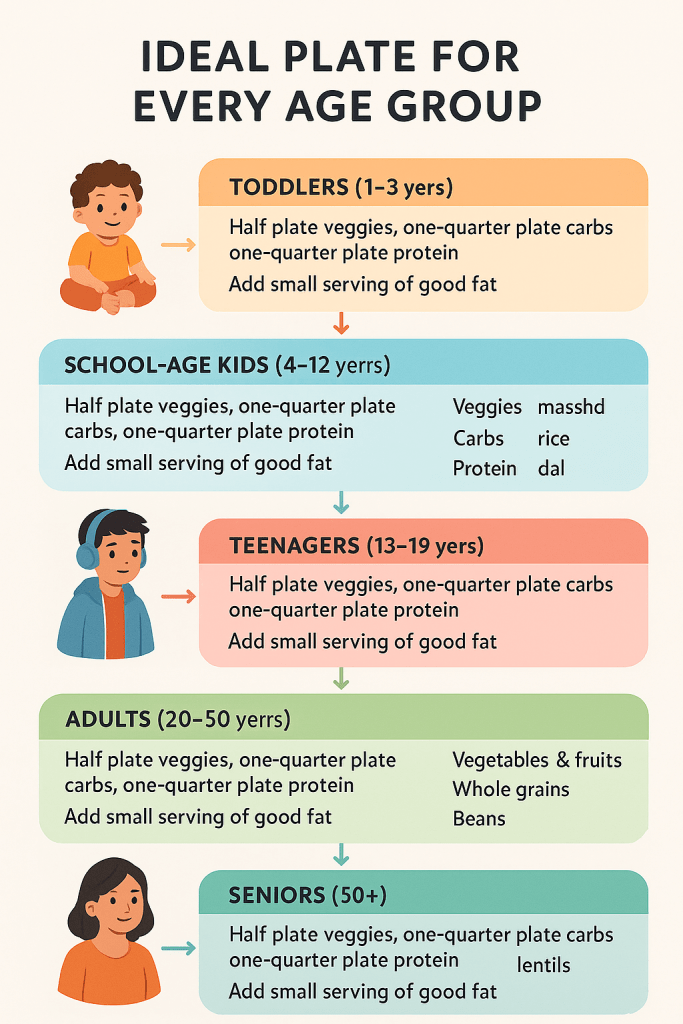
Age-Wise Food Guide

1. Toddlers (1–3 years): Building Blocks

  • Small stomachs, big needs!
  • Focus on: Full-fat milk, mashed vegetables, soft fruits, rice, dal.
  • Avoid: Excess sugar or salt.

My tip: Mix vegetables into khichdi or soups—they’ll never notice!

2. School-Age Kids (4–12 years): Fuel for Growth

  • Growing fast and always active.
  • Focus on: Protein (eggs, lentils), calcium (milk, paneer), colorful veggies, whole grains.
  • Avoid: Packaged snacks, sugary drinks.

What to do: Replace Chips with roasted Makhana or Fruit sticks

3. Teenagers (13–19 years): Hormones & Hunger

  • Emotional, physical rollercoaster!
  • Focus on: Iron (green leafy veggies, dates), Protein (nuts, fish), Omega-3s.
  • Avoid: Skipping meals or surviving on instant noodles.

Your Children will love smoothies if you mix Cocoa Powder and call it Choco-Power -Drink

4. Adults (20–50 years): Balance & Stress Buster

  • Working long hours, sedentary lifestyle.
  • Focus on: Fiber (vegetables, fruits), Lean proteins, Healthy fats (nuts, seeds).
  • Avoid: Overeating at night, mindless snacking.

Working people prep meals in advance on Sundays – saves time and helps you stay on track.

5. Seniors (50+): Strength & Digestion Support

  • Nutrient absorption slows down.
  • Focus on: Calcium, Vitamin D, Easily digestible proteins, Hydration.
  • Avoid: Hard-to-digest fried food.

For Senior people like our parents make soft vegetable upma and warm haldi milk daily.

Simple Reminder for All Ages

Hi, I’m Sonita — the voice behind Healthy Living Hub. I share simple, science-backed tips to live a healthier, more balanced life — one mindful choice at a time. 
“I believe real health comes from small, consistent habits — not perfection.”

Unlocking the Power of Micronutrients: A Guide

When we think about eating healthy, we often focus on carbs, proteins, and fats. But there’s a group of tiny nutrients that quietly do some of the biggest jobs in our body — micronutrients.

Let’s break them down step by step.

What Are Micronutrients?

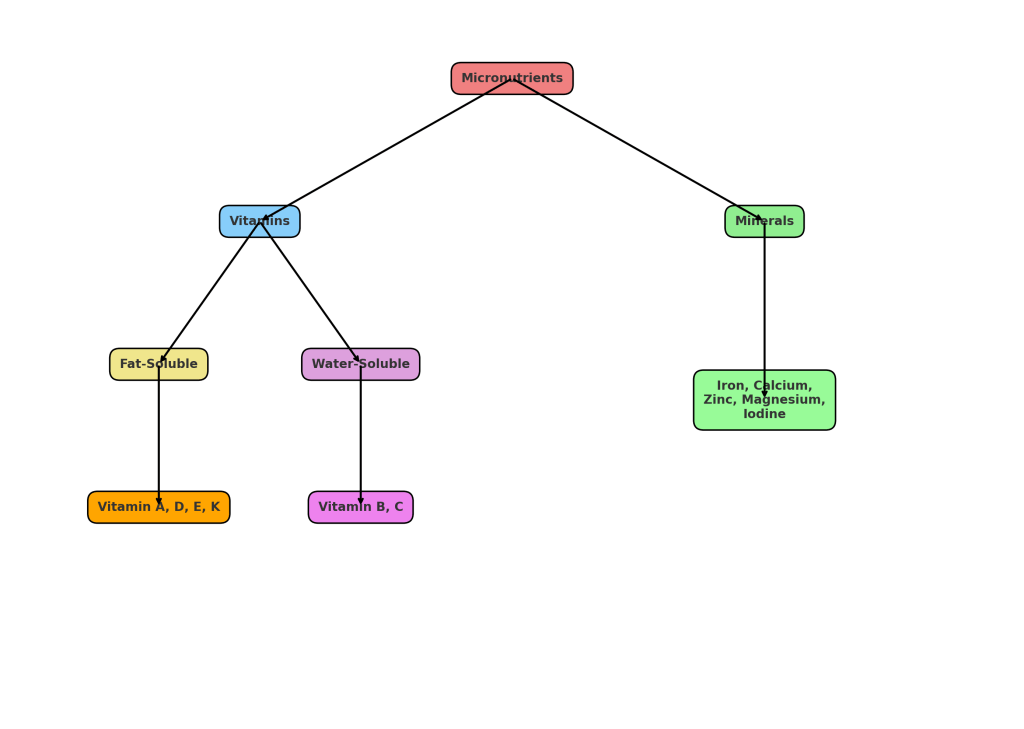
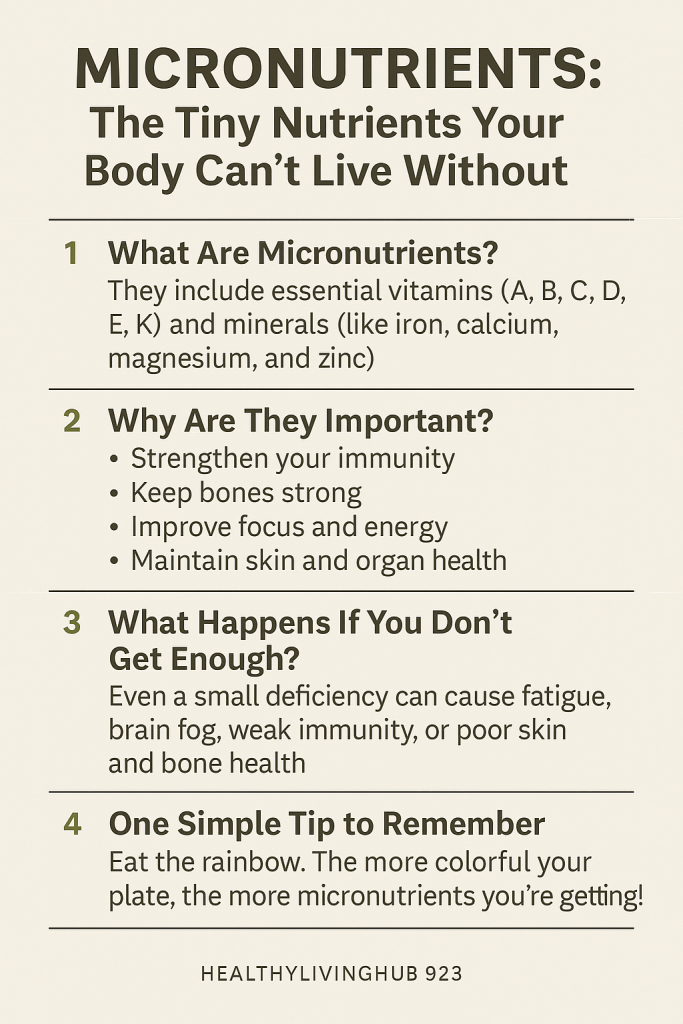
Micronutrients are vitamins and minerals that our body needs in small amounts, but they are absolutely essential for:

TWO MAIN TYPES OF MICRONUTRIENTS

1. Vitamins

 – The Helpers

a. Fat-Soluble Vitamins (stored in body fat)

b. Water-Soluble Vitamins (not stored – need daily)

  • Vitamin C – Immunity booster (citrus fruits, amla)
  • Vitamin B-complex – Helps energy and nerve health (whole grains, dairy, leafy greens)

2. Minerals

 – The Builders

Here are the most important ones:

Why Are Micronutrients Important?

Even a tiny deficiency can lead to:

How to Get Enough Micronutrients?

Simple rule: Eat a rainbow every day!

Final Thought

Hi, I’m Sonita — the voice behind Healthy Living Hub. I share simple, science-backed tips to live a healthier, more balanced life — one mindful choice at a time. 
“I believe real health comes from small, consistent habits — not perfection.”

Blog at WordPress.com.

Up ↑