
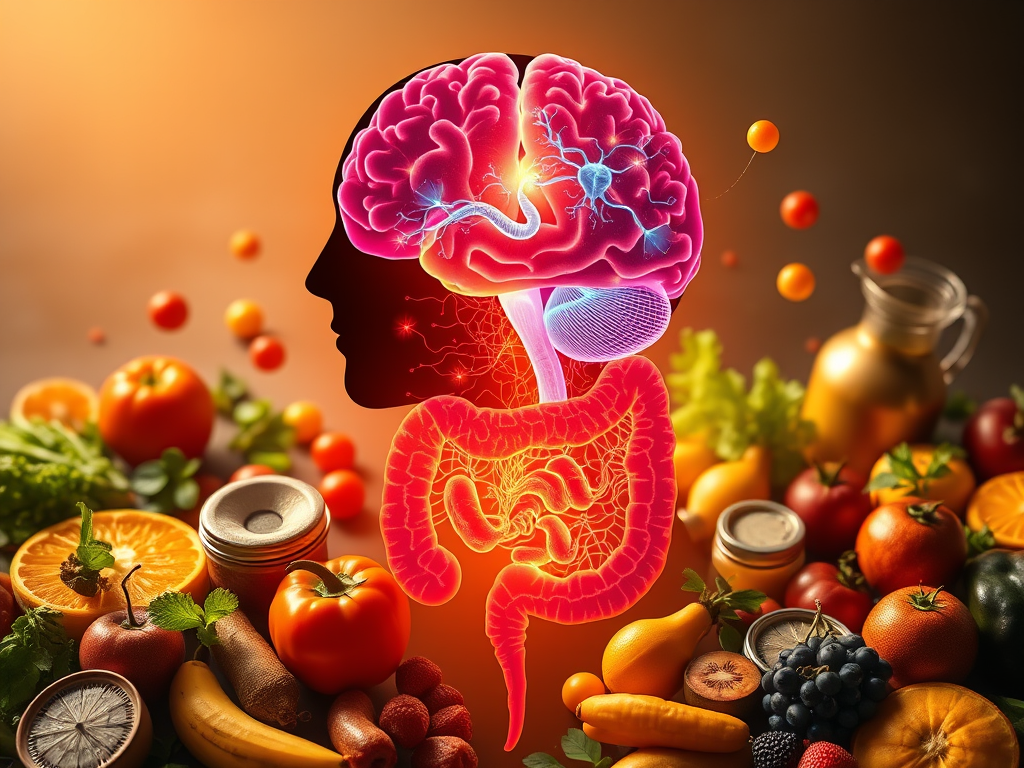

Have you ever noticed how your stomach reacts when you’re stressed, anxious, or even excited? A flutter before a big presentation, that tight knot when you’re nervous, or even butterflies when you’re happy — they’re not just in your head. They’re in your gut too.
We often think of our brain as the command center for all emotions, but surprisingly, our gut has a lot to say in that conversation. In fact, scientists now call the gut our “second brain.” And trust me, it’s not just a fancy term — it’s real science.
The Brain–Gut Connection: More Powerful Than You Think
Our gut and brain constantly talk to each other through something called the gut-brain axis. It’s like a private communication line between the two — carried through nerves, hormones, and millions of tiny messengers.
So when your gut is happy, calm, and balanced, your mind often feels the same. But when your gut bacteria are out of balance (what doctors call gut dysbiosis), it can trigger anxiety, brain fog, irritability, or even mild depression.
Meet Your Mood Managers: The Gut Microbes
Here’s the amazing part: around 90% of the body’s serotonin — the “happy hormone” that boosts mood and relaxation — is actually produced in the gut!
Yes, you read that right. Not in your brain — but in your gut.
That means if your gut is inflamed, sluggish, or filled with the wrong kind of bacteria, it can directly affect how happy or calm you feel.
Think of your gut bacteria as little mood managers — they help produce and regulate neurotransmitters like serotonin, dopamine, and GABA, which influence sleep, motivation, and stress response.
How Food Affects Your Feelings
What you eat directly shapes your gut microbiome, and that, in turn, shapes your emotions. It’s that simple and that deep.
When you eat:
- Fermented foods (like homemade curd, idli, dhokla, or kanji) → you feed good bacteria that support calmness and focus.
- Fiber-rich foods (like vegetables, fruits, oats, and lentils) → you provide fuel for those bacteria to thrive.
- Processed or sugary foods → you feed the “bad guys,” leading to more inflammation and unstable moods.
I often tell myself — if my mood swings are getting worse or I’m feeling off for no reason, maybe it’s not “just in my head.” Maybe it’s in my gut.
Listen to Your Gut (Literally!)
Next time your stomach feels bloated, uneasy, or heavy after eating, don’t just brush it off. It’s your gut trying to talk to you.
Try to notice:
- How you feel after certain meals.
- Whether you’re eating slowly or rushing through.
- If your sleep or stress is affecting your digestion.
Because your gut is more emotional than you think — it remembers, reacts, and responds to how you live every single day.
Small Steps to Heal Both Gut and Mood
- Start your morning with warm water and a calm mind. It wakes up digestion gently.
- Add one fermented food daily. A small bowl of curd, a glass of buttermilk, or homemade pickle counts.
- Cut down on ultra-processed food. They kill your good bacteria silently.
- Chew slowly. Your brain gets time to register that you’re eating — digestion actually begins in the mouth!
- Sleep well. Your gut microbes repair themselves at night.
Final Thoughts
We often separate mental health and physical health as if they belong to different worlds. But the truth is — they live in the same house. One affects the other.
So next time you feel low or anxious, don’t just reach for coffee or your phone for distraction. Maybe sit back, take a deep breath, and ask — “Is my gut okay today?”
Because when your gut feels good, your mind often follows.
A Little Note From Me
I started paying attention to my gut health recently — eating slowly, adding curd to my meals, and cutting down on packaged food. And honestly, I could feel the difference. My energy became steadier, my mood lighter. It felt like my body and mind finally started speaking the same language.
Sometimes, small mindful changes do more than any medicine or motivational quote ever can.
You can also watch here👇
https://youtube.com/shorts/ulEbOFwzTLU?si=WeSmK1uMjpnohqx4
Hi, I’m Sonita — the voice behind Healthy Living Hub. I share simple, science-backed tips to live a healthier, more balanced life — one mindful choice at a time.
 Healthy Living Hub
Leave a comment